Sunday, 16 January 2011

Looking for Leopold: My Search for my Elusive Grandfather

Back in November and December 2007 I wrote about my research into my Levy family, specifically my attempts to find out more about my elusive grandfather, Leopold Levy. In those posts I wrote of what little I knew of him -- the story that he came from Alsace, was proficient in seven languages and had supposedly married my grandmother, Alice Rodrigues Da Costa, in Haiti. I also described how I found out that the marriage had actually taken place in Colon, Panama, that they lived in Kingston where their seven children were born, how three of those children died in childhood and that the family had moved around, living at various addresses in Kingston. Later on, in 2009, I wrote about my grandmother, Alice Rodrigues Da Costa, but somehow I never returned to Leopold. It’s time for me to go back to my paternal grandfather and what little more I’ve been able to find out about him.


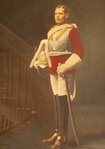
A few years ago I made contact with a cousin in the United States. My cousin, Cheryl, is the granddaughter of my Aunt Essie, my father’s sister. Although my mother did keep in touch with Essie and her daughter-in-law, Gloria, Cheryl’s mother, the family was never close, though I do recall that Essie would send us a box of Whitman’s Sampler chocolates at Christmas. Cheryl and I corresponded several times by good old snail mail, and she sent me a number of photographs which she had found in her grandmother’s possession. Most were not identified, but I am pretty sure that a couple of them were of my grandfather, Leopold, and of his wife, Alice. Here is the photo which I believe to be of Leopold:
Of course, I have no proof that it is him, but I like to think that it is. Also in the photos I received was this one, which I am quite sure is of Alice and two of her children, my father, Michael and his sister, Essie.
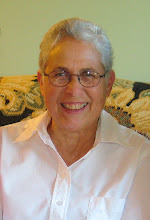
I see the resemblance to my father in the eyes of the little boy, but I’m even more sure of the little girl, especially when I compare her face to the one in this photo of my Aunt Essie:


It’s always been one of my regrets that I never knew either of my grandfathers, both being so much older and dying long before I came on the scene. Ironically, I have no photograph of my grandfather, William Dey Smedmore, but I certainly knew quite a bit about him, thanks to my mother and her siblings. My grandfather, Leopold, was a mystery. He was from Alsace, or as the family called it, Alsace-Lorraine, that unfortunate part of Europe between France and Germany which seemed to bounce back and forth between the two countries. I knew nothing of how he came to be in the West Indies, or how he met my grandmother. I knew that they had married in Colon in 1886, barely two months before the birth of their eldest child. I knew this because of a notice in the Gleaner which had been pointed out to me by Madeleine Mitchell who had come across it while extracting information from the microfilm of the Gleaner. Once the Gleaner went on line I was able to find the notice myself.
So now I knew exactly where they were married, but more questions arose. Where did they meet?  Was it in Jamaica? Did Alice go to Colon to get Leopold to marry her?  I wondered if Alice’s pregnancy had become a scandal in Kingston and that marriage was the only option. The notice in the Gleaner might well have helped to stop some of the gossip. Again, who knows? Leopold was Jewish, Alice was Catholic, and marriage in a church must have been out of the question, hence they were married by the registrar. Unfortunately I have been unable to find a record of the marriage. At that time Panama would have been a colony of Colombia and I assume records of civil registration for Panama in the 19th century must be somewhere in Colombia, but I have not been able to discover how to access them.

From what little information I could glean about my grandfather it appeared that he was a traveller of sorts. According to the family story, he was an optometrist, and I found the same information in my father’s entry in the Jamaica Who’s Who of 1941-46, keeping in  mind, of course, that he would have given that information
However, I never found any evidence to support this. On the various records of birth and death for his children, I found Leopold’s occupation variously described as “merchant”, “book clerk”, “accountant”, “book-keeper”, and “clerk” – no mention whatsoever of “optometrist”.  He married Alice in Colon in 1886, was still there when Daisy, the eldest child, was born. He was in Kingston for the birth of his second child, Lucien, but was listed as being in Port-au-Prince, Haiti, when Essie was born in 1891. He was back in Kingston for the birth of Gustave in 1894, and I have no idea where he was for the births of Leo and Joe in 1895 and 1900 respectively, as he was not the informant for either event.  As I mentioned before in an earlier post, the family seems to have moved from one address to another in Kingston; in fact, they lived in seven different places in the span of fourteen years between 1886 and 1900.  

Apart from the above the only other tangible record I had for Leopold was his signature on two documents – the birth of his son, Lucien in 1887:
and as a witness at the marriage in 1907 of his wife’s niece, Naomi Da Costa, to Gabriel Oppenheim Alexander.
So at least I knew that he was in Jamaica in 1907, but that was all.  When did he die and where, and was it possible to find out when and where he had been born? In my next post I’ll write about the discoveries I did make as a result of finding a notice of Leopold’s death in the Gleaner.

Friday, 31 December 2010

The Ford Boys Make Good!

I have not been able to find any evidence that James and Henry Ford had relatives in Jamaica who might have suggested that they emigrate. Most likely they were encouraged to do so through the efforts of the Jamaican government’s immigration policies. One question I had was what became of the Ford family in England.  I could not find Thomas Ford in any census after 1851, so I assume he must have died. The name is a common one, but I believe he may be the Thomas Ford who was buried 24 December 1853 in Highgate Cemetery. His wife, Jessy Maria, had died in July 1846. Two of their children, Martha Cleland and Albert Charles, died in March 1843. I have been unable to find out what happened to the other two sons, Thomas Frederick and William, though there is a Thomas Ford, age 22 in the 1851 English census, whose age matches that of Thomas Frederick, who was born in 1829. This Thomas Ford is listed as a visitor at the house of one William Edwards, a journeyman carpenter in Camberwell. Thomas’s occupation is given as journeyman coach builder, so he may well have left home to find work elsewhere.
By chance, I found that the youngest daughter, Jessy Maria, came to Kingston, perhaps because her father and mother were dead, and Thomas was no longer living at home. It’s possible that James and Henry encouraged her to come to Jamaica to be with them. At any rate she died there, according to the Monumental Inscriptions of the British West Indies, by James Henry Lawrence-Archer, as excerpted on the Jamaican Family Search website on 23 March 1862 and was buried in the New West Ground “regretted by brothers”.

Family history research is more than just records of birth, marriage and death. We want to know more than just the bare facts about our ancestors –what they were like and how they lived. Without access to such materials as letters or diaries we have to depend on other sources, and one such is the local newspaper. Jamaican researchers are fortunate to have access to the online Jamaica Gleaner, a subscription website. Thanks to the Gleaner online I found several references to both James and Henry Ford and how they had prospered in Jamaica. Henry’s lengthy obituary gave me the date of their emigration to Jamaica, and other items and advertisement helped to portray a picture of both men. From Henry’s obituary, which ran to one and half columns, I learned that he had entered the office of Mr. J. Mais. where he was placed in the counting house under Mr. Newman.    He then moved on to the Receiver General's office where he was appointed acting Receiver of Stamp Duties under Mr. Barclay. After some years in the public service he left to go into business with the said Barclay in St. Thomas-in-the-East. Barclay died in 1860 and Henry continued on in the business. He also bought out the business of Mr. Rouse of Rouse and Gall, becoming a partner in the business which had been carried on by the late James Gall. Henry had also served as a member of the Mayor and Council of Kingston. During the Morant Bay Rebellion of 1865 his business was severely affected and he went there to serve as a captain of company of volunteers. He built up a business in the parish of St. Thomas but experienced some difficulty because he refused to sell liquor, being a teetotaler. He made an unsuccessful migration to Australia, returning to Jamaica, and by 1878 had assumed the position of Secretary to Jamaica Co-Operative Fire Insurance Company.

James’s obituary, unfortunately, was not as extensive. He died as a result of malarial fever in 1881, at age 56. The following brief notice appeared in the Gleaner of 16 June, 1881:

With deep regret we announce the death of Mr. James D. Ford, at his residence in
Duke Street
, at 3 o'clock this morning. Mr. Ford had been ill only a few days from malarial fever, but his strength gave way speedily. He was 53 [sic] years of age and at the time of death head of the Good Templars of Jamaica. We have been requested to state that in consequence of his death the Congregational Lodge, I.O.G.T., will not meet this evening. The funeral takes place at 5 p.m. today.

Nothing about his business endeavours or even his family! No doubt the obituary was written by a Masonic brother! Fortunately I found other items about James in the Gleaner. I knew from his marriage record that he was a bank clerk when he married Cordelia Henriques. He must have been incredibly industrious as he rose from that position to that of auditor for both the Jamaica Co-Operative Fire Insurance Company and the Jamaica Marine Insurance Company.

The advertisements appeared in the Gleaner in 1879. But other notices about James’s business endeavours were even more interesting. Along with his auditor’s work James ran a school at his home in Duke Street, the Kingston University School. It opened on 2 October 1871 and was described in the first advertisements as offering “a sound, practical and liberal education, based upon high moral and intellectual principles.”


The following is an example of one of the advertisements from the Gleaner of 12 November, 1872.


I was particularly intrigued by the mention of Hebrew as an extra subject.  Did Cordelia help teach that course, or did James hire a Jewish acquaintance to teach the language? Another interesting point is that the school took boarders, which means James’s house at
118 Duke Street
must have been quite large.
Duke Street
would have been quite an attractive neighbourhood to live in, and a sign that James had indeed done quite well for himself.

The purpose of the school seems to have been to prepare young men for the professions, judging by the following advertisement in the Gleaner of 10 June, 1878:


Less than three years later James was dead and one wonders what happened to the school. Cordelia outlived him by a mere seven months. Perhaps Henry took over the operation of the school. According to an advertisement in the Gleaner of January 27, 1902, he had been living at 118 Duke Street when he died and creditors of the estate were instructed to send their claims to his wife. However, I could find no further references to the school in the Gleaner after James’s death and it appears that 118 Duke Street must have been sold and eventually converted to apartments.


James and Henry are examples of immigrants to Jamaica who did very well both in business and in life. Both married and had families. James and his wife, Cordelia Henriques, had ten children. Henry married Ellen Hannah Savage and they had one daughter, Edith. One of James’s sons, Edmund George, settled in Panama and raised a family there. My research into this branch of the Cunha family has been a fascinating one.


Monday, 15 November 2010

Finding Out About the Fords

In my last post I mentioned that I had found evidence in the Gleaner that James Dearmer Ford and his brother, Henry, came to Jamaica in 1840. This information was in Henry’s obituary in 1901 and is really the only evidence I have that the Ford brothers came from elsewhere. I assumed that they had most likely come from England and so my next step was to see what I could find out about them. The International Genealogical Index, known as the IGI, is an excellent Internet resource to get one started in finding out more about one’s ancestors. It is part of the FamilySearch website from the Church of Jesus Christ of Latter-day Saints, of which more in a moment. Since James Dearmer Ford had a rather unusual middle name I started with him. I knew, from the notice in the Gleaner, that he had died in 1881 at the age of 56, so armed with that information I searched the IGI and found his baptism, in 1825, in London, and that his parents were Thomas Ford and Jessey [sic] Maria. Further searching, using Thomas Ford and Jessey (or Jessy) as parents, brought up not only James but his brother Henry and other members of the family.


The IGI is only an index, created by the Church of Jesus Christ of Latter-day Saints (LDS), aka Mormons, as an aid to their members to perform their obligation to research five generations of their family, as part of their religious duties. The IGI includes records extracted from parish registers as well as records submitted by members of the church. It is therefore a good place to start, but one is advised to search for the original record if possible as there might be errors in transcription. Fortunately for me, a great many parish records for London are available on the subscription website, Ancestry, and that’s where I went to find out more about the family of Thomas Ford and his wife Jessy Maria.

Thomas Ford was born in 1802 in Bideford, Devon, the son of a John Ford.

A view of Bideford showing the bridge over the River TorridgeCourtesy of Old UK Photos
At some point Thomas moved to London where he met Jessy Maria Dearmer, who was born about 1804 in Hackney. They were married at St. Leonard’s, Shoreditch, on 1 May 1824.
St. Leonard's, Shoreditch
Their first three children, James, 1825, Henry, 1826, and Thomas Frederick, 1829, were baptized at St. Leonard’s. After that the family moved to St. Marylebone where William, 1836, and Martha Cleland, 1838, were born. By 1841 the family was settled in Southwark, where Albert Charles, 1841 and Jessy Maria, 1844, were born.


Thomas Ford seems to have tried his hand at various occupations. On the baptismal records for James and Henry he is listed respectively as a carpenter and a sawyer. By the time William comes along he is a clerk, and on Martha’s record, in 1838, he calls himself a timber merchant. By the time Albert is born Thomas is describing himself as a gentleman, but on Jessy’s baptismal record he has become a traveler, presumably a traveling salesman. It’s hard, therefore, to get a picture of how well-off the family was, but there must have been some reason for the two eldest boys, then aged fifteen and fourteen, to leave London and travel to a strange new country to seek their fortunes.

Why Jamaica? It’s entirely possible that Thomas Ford had a relative living there, but I have not been able to find any evidence to support that, though it is the most likely reason for the two boys to have chosen to go there. Another reason, however, is that the Jamaican government at that time was actively encouraging immigration to the island. Slavery had been abolished in 1834 but, in order to appease the planters, a system of apprenticeship for the freed slaves was put in place, so that in fact real emancipation did not come into being until August 1, 1838. It goes without saying that the freed slaves had no desire to continue working for their former slave owners and overseers, and in fact were happy to work their own little plots of land, being so encouraged by the Baptists who helped to set up various villages where former slaves could own and cultivate their own land. The Jamaican government, therefore, was forced to encourage immigration to the island to take the place of the former slave labour. Many schemes were put in place at this time, as per various Immigration Acts passed by the Assembly. The Government appointed an agent to recruit settlers to the island and immigration was encouraged from England, Europe and even the former American colonies. There is an excellent report on this on the Jamaican Family Search website at http://jamaicanfamilysearch.com/Samples/immig.htm.

As the only evidence I had for the Fords coming to Jamaica in 1840 was Henry’s obituary in the Gleaner I did search to see whether the date was correct by searching for them in England. The earliest nominal British census was taken in 1841.  I found the household of Thomas Ford in the 1841 census, in Christ Church, Southwark. With them were Thomas Frederick and Martha Cleland. There was no sign of either James or Henry, nor could I find them anywhere in the English census records. Nor could I find any trace of William who would have been five years old.  He may have died, but I could not find a record to support that.  However, childhood mortality was high in those days, and sadly, Martha Cleland Ford and her as yet unborn brother, Albert Charles, were both dead by March 1843.

Whether or not James Dearmer Ford and his brother, Henry, were recruited to Jamaica, or else came at the behest of a relative there, is not known, but once there they apparently made a success of it, not on any plantation that I know of, but in the city of Kingston.
Kingston, Duperly, 1850
In my next post I shall describe how the two brothers made a successful life in Jamaica.


Sunday, 12 September 2010

Leaving London: the Ford Boys Come to Jamaica

It’s been a busy summer and I’ve neglected My Jamaican Family, but I’m back now, carrying on the story of the Cunha family and their connection to the Fords. I knew nothing about the Fords, and my curiosity about them was stirred by the marriage of Percival Cunha to Marianne Bravo Ford in 1879. Here is a copy of their marriage record.

They were married 27th August 1879 in St George’s Anglican Church by Enos Nuttall, who later became Bishop of Jamaica. Both were listed as of full age, though their ages were given on the record, and the witnesses to the marriage were all from the Ford family – Jas D. Ford, Florence Louise Ford and Henry B. Ford.

So, who were these Fords anyway? The first task was to find out who Marianne’s parents were. Since Percival and Marianne were married in the Anglican Church I assumed that she must have been baptized in that church, since the Cunhas were certainly Methodists. I found Marianne’s baptism in the Church of England copy registers and saw that she was born 5th February 1858, daughter of James Dearmer Ford and his wife, Cordelia and that she was christened Marianne Bravo. So now I knew that the Jas. D. Ford who was a witness at her marriage had to be her father, James Dearmer Ford. My next step, then, was to search for the marriage of James Dearmer Ford to this Cordelia. I could not, however, find any trace of the marriage in the Anglican registers, so moved to the Dissenter Marriage Registers, on the off chance that they were married in another Protestant denomination, and sure enough, they were. I found that James Dearmer Ford and Cordelia Henriques were married by license on December 15, 1852 in St. Andrew’s United Presbyterian Church in Kingston by one James Watson. Here is their marriage record:

James was twenty-seven years old, a bank clerk, and Cordelia was twenty-one, so both were of full age to be married. The witnesses at this marriage were Henry Ford (again!), an M. Mais, Catherine Dean, Mary Ann Melhado and F. G DaCosta. Here is a recent photo of St. Andrew’s Presbyterian Church, now known as Scots Kirk.

The names Melhado and DaCosta are Jewish, as is Henriques, which made me wonder if Cordelia had married outside of her faith. I therefore searched the Jewish records to see if I could find her birth, which, based on her age at marriage, would have been about 1831.


However, I could find no trace of Cordelia’s birth in the Jewish records, the originals of which are in the National Archives in Spanish Town, but which have been transcribed by Mrs. Phyllis Delisser and can also be found on the Jamaican Family Search website. According to Donald Lndo’s CD, Genealogy of Jamaica, Cordelia was the daughter of one Benjamin Quixano Henriques, who had married Abigail Mesquita, though no date for her birth was given. The source for this was First American Jewish Families, a compilation by the late Malcolm H. Stern, originally published in 1960, the third edition of which was published in 1991. It is also online at http://www.americanjewisharchives.org/FAJF/intro.php.  Stern gave a list of children for Benjamin and Abigail, which included Cordelia (no birth date) and the notation that she had married “Ford”. I was able to find four of these children in the Sephardic records and noted that the last one listed, Nathaniel, was born in Spanish Town in 1927. It’s possible that the other children born after Nathaniel were also born there and that their births were not sent to the synagogue in Kingston and so have not survived in the records. One curious omission in Stern’s list was that of Amos Henriques, born in 1811, who later became a well-known physician and is written up in the Jewish Encyclopedia. In researching Amos I discovered the notice of his death in 1880 in the Jamaica Gleaner of July 7th of that year, which clearly stated his relationship to Cordelia, thus confirming her paternity.

Died

At 67 Upper Berkeley Street, London, of 5th June 1880, of Paralysis of the Heart, Dr. Amos Henriques, aged 72, formerly of Kingston, and deeply regretted by an affectionate wife and children, his sister here, Mrs. Jas. D. Ford, two brothers in Australia, and numerous relatives and friends here and in London.

So now I knew that James Dearmer Ford had married a Jewish girl, but who was he and where had he come from? Unable to find any information about him in the records I started searching the Gleaner for any stories about James Ford and his brother Henry, and it was through Henry, or rather his lengthy obituary published in the Gleaner on November 18, 1901, that I learned the origins of the Ford brothers.


There it was – James and Henry had come to Jamaica on February 14, 1840! It seemed to me that they had most likely come from England and so I changed course and began researching in English records to see what I could find. In my next post I will describe my research into the Ford family.

Sunday, 27 June 2010

Some Thoughts on Violence and its Consequences

It has been a long while since I updated this blog … overtaken by various duties and obligations I’ve neglected my posts, but lately I’ve been paying attention to events in two countries, my birthplace and my present home. As I write this the City of Toronto is reeling from the destruction caused by a small group of anarchists, calling themselves the Black Bloc, who have managed to hijack the peaceful protests against the current G20 meetings taking place in the city. Can such anarchist and nihilist behaviour ever be justified? Not always. I don’t deny the right of peaceful protest to those who disagree with the leaders of the G20, who think that they do not care for the average person, and who deplore the amount of money that has been spent on this summit and the security to protect the leaders themselves. They have the right to express their opinions peacefully, but what we have seen this weekend is not peaceful protest but anarchy.

At the same time, not too long ago, in Jamaica we saw a state of emergency declared and a police and army raid on Tivoli Gardens in downtown Kingston, all in order to arrest one man, Christopher “Dudus” Coke, a notorious gang leader, in order to turn him over to United States authorities. There was violence there too – much more serious than what we are seeing in Toronto at present – as more than 75 people were killed in the raids. “Dudus” has now been captured and extradited to the U. S.

Many of the comments I have seen about the violence in Toronto in the various online news sources are to the effect that this is not how Canadians behave – that it gives Canada a bad name, and so on. But this country has seen violence against authority in the past. As George Santayana said: “Those who do not remember the past are condemned to repeat it.” The rebellions of 1837 are a case in point. William Lyon Mackenzie and his supporters rebelled against the government of the day, the Family Compact, in Upper Canada. For this he was forced to flee the country, many of his supporters were arrested, a few hanged and others transported to Van Diemen’s Land (Tasmania). The consequences of the 1837 rebellions was the appointment by Great Britain of Lord Durham

who was sent to investigate the situation in the Canadas and proposed changes to the status quo which led to the establishment of responsible government. Not only that, but Mackenzie himself, the Firebrand, became Mayor of Toronto and part of the establishment.

There have been many cases of violence in Jamaican history, some of which has brought changes for the better. I think particularly of the 1831-32 slave revolts, also called the Baptist war, in the western parishes, which was led by Sam Sharpe

and which were to lead eventually to the abolition of that pernicious institution, slavery, in the British colonies in 1834. Reviled as Sharpe was in his day – and he was hanged for his pains – he was declared a National Hero of Jamaica in 1975 and there is a statue commemorating him in the square in Montego Bay.


Nor should we forget the 1865 Rebellion in Morant Bay, led by Paul Bogle, which protested the treatment of a poor black man who had been put on trial for the crime of trespass on a long-abandoned plantation. Here there was violence on both sides but more so on the part of the Government under the leadership of Governor Edward John Eyre who put the rebellion down with the utmost brutality. Bogle and many of the rebels were hanged, some without a trial, and so was a member of the House of Assembly, George William Gordon, who had opposed Eyre but who had not taken part in the rebellion. And the consequences? Well, Eyre was recalled to England, the Jamaican House of Assembly renounced its charter and Jamaica became a Crown Colony. Clinton Black, in his book, The Story of Jamaica (London: Collins, 1965), sees this as a turning point in the island’s history as it gave the governors of this period the opportunity to push through various reforms and improvements. Both Bogle and Gordon were declared National Heroes of Jamaica.

I realize all this is very far from what I’ve been writing about in this blog, My Jamaican Family. One thing I’ve realized is that Jamaica, as it exists now, is not the Jamaica I grew up in. At the same time I feel it is important to remember the past, because we, and Jamaica, are products of that past. I cannot say what the end result will be of the raid on Tivoli Gardens, any more than I can say what may come from the violence in Toronto this weekend. That is probably very far in the future. For now I plan in my next post to return to the 1831 slave revolt and its consequences – the abolition of slavery and what it meant to the family I have been following, the Cunhas and a connected family, the Fords.

Arras Memorial

Arras Memorial

Trooper Victor Dey Smedmore

Trooper Victor Dey Smedmore
My uncle Victor