Showing posts with label port royal. Show all posts

Friday, 9 December 2011

The Smedmores of Port Royal

William Dey Smedmore and his family lived in Port Royal until about 1896, probably on a street very much like this one pictured above. In fact, they lived at two different addresses according to the records I have found. But I’m getting ahead of myself here. Let’s begin with his marriage, as I know very little about him prior to that event.

William married Amanda Brown at the Kingston Parish Church on 6th December 1882. He was a bachelor, aged forty-four, and gave his occupation as writer, H. M. Dockyard. Amanda was a spinster, aged twenty-one, no occupation. Both gave their abode as Port Royal. William gave his father’s name as William Dey Smedmore (dead), and Amanda’s was given as Daniel D. Brown.  They were married by the Rev. G. W. Downer, and the witnesses were B. Mortimer Dias and C. L. Cunha.

Well, there are a couple of problems with this record. No record has so far been found for William’s father, so we cannot be sure that this was indeed his name. Secondly, Amanda’s father’s name was Daniel Elias Brown, so the middle initial “D” is incorrect.  Another oddity is my grandmother’s age. I don’t know if my mother ever saw this marriage record, because, curiously enough, she always claimed that her mother’s birth date was 10 July 1864, and that she was actually only eighteen when she married William. However I have found the record of Amanda’s baptism in the Wesleyan Methodist church, in Jamaican Family Search, and she was definitely born on 9 August 1861, which would agree with her age at marriage. It seems odd to me that my grandmother’s children had a completely different date for her birth, not just a different year but a different month and day!

William’s occupation of “writer in H. M. Dockyard” was also puzzling. I discovered that a writer was  a clerk, a civilian employee in the Royal Navy, at the Dockyard in Port Royal. William’s close friend, George Christopher Baylis, who was a  connection through marriage to his wife’s half-sister, was also a writer at the naval yard.

The first three children were born at
Sime Street
in Port Royal. According to the birth records the two eldest, Sylvia and Victor, were born at no. 2 Sime Street, in 1884 and 1886 respectively, and the third child, Norman, was born in 1887 at no. 1 Sime Street. Shortly thereafter they moved to Fishers Row. I came across a brief note in The Gleaner of 1st May 1888 which mentioned this move.

So it appears that the Smedmore home was to be taken over to be used as barracks for the Army. Might this have had something to do with a story my mother told me about her older brother, Victor? As a young child he had reported seeing a soldier in military dress walking up and down the balcony or piazza of the house they were living in. The tale was that the house had been a barracks and that Victor had seen a ghost. Victor would have been about two years old at that time. It’s possible he saw a real soldier if military personnel came to the house to inspect it prior to taking it over.  At any rate the family moved from there to Fishers Row where the next four children were born – Elma in 1889, Owen in 1891, Maud in 1894 and Rodney in 1896. Then, some time after this they removed to Kingston where the last two children were born – Lucius in 1899 and Julian in 1902.  By 1896 William Dey Smedmore was sixty years old and had retired from his position at the Dock Yard. The family settled down in a large house at
49 Beeston Street
and I have written about that house in a previous post.

In my next post I’ll relate the stories I heard about my grandfather from my mother, as well as a few other items I found in The Gleaner  about him … gold to the enquiring genealogist!

Sunday, 16 October 2011

My Other Grandfather -- William Dey Smedmore

Having just about given up on finding out more about my elusive grandfather, Leopold Levy, I’ve decided to move to my maternal grandfather, William Dey Smedmore … not that’s he’s any easier to research. I have no idea who his father was, and only hearsay evidence as to the identity of his mother. I’ll explain why in a moment, but suffice it to say, I do at least know a great deal more about him than my other grandfather, thanks to the stories I’ve collected from my mother and her siblings over the years. I’ve also been able to find a few records pertaining to him as well as items about him in the Jamaica Gleaner.


My mother’s family lived in Port Royal. My maternal grandmother, Amanda Brown’s family had deep roots there and it’s where my grandfather, William Dey Smedmore, was born.
This is a view of Port Royal about 1890, showing the church and town, looking west towards the entrance to Kingston Harbour.  The town’s heyday was in the seventeenth century when it served as headquarters for the buccaneers who pillaged the Spanish Main, but all that came to an end with the disastrous earthquake of 1692 when more than half of the town was swallowed up by the sea. What remained was a small fishing village with a naval station and dockyard, but even that would pass away. By 1881 the population was 1205, exclusive of shipping. According to Michael Pawson and David Buisseret in their book, Port Royal, Jamaica (1975):

"By [1900] Port Royal's days as a naval base were numbered. The later nineteenth century had seen the rise of the so-called 'blue water school' of British imperial strategists, advocating very powerful fleets operating out of the United Kingdom, supported by a small number of strongly-fortified bases.  The Port Royal yard was too small to rank as one of these, and so in 1905, following the reorganization directed by Admiral Sir John Fisher, her last  commodore, F.W. Fisher, hauled down his flag."

My grandfather, William Smedmore, was employed at the Dockyard as an Admiralty writer, but seems to have retired some time between 1896 and 1899 when the family removed to Kingston.


The image below is of the baptismal record for my grandfather, William Dey Smedmore. As you can see, no parents are named in this record, a clear sign that he was illegitimate. For reasons that are highly frustrating to Jamaican researchers, there is a period of time in the baptismal records where many Anglican priests would not record the names of either parent if the child was born out of wedlock. Some would (very few), and some would at least record the mother’s name. Curiously, the very early registers prior to 1825 recorded all this information, including the fact that the parents were not married, but not so by the 1830s.

William Dey Smedmore … and no one can figure out where the name “Dey” came from … was born 29th October 1836, and baptized on 1st January, 1837. On June 20th of that same year Victoria ascended to the British throne. My grandfather, from all that I’ve learned about him, was a Victorian paterfamilias through and through. He appears to have ruled his family in strict Victorian style and was much loved and feared by his nine children, who called him Papa.  His word was law, and no one defied it. All of the children lived at home after they moved to Kingston from Port Royal. None of those who married did so before his death, and even the eldest son, Victor, who went to England to enlist in the Army in the First World War, waited till 1915 after his father had been dead for over a year.
 
I know very little of my grandfather’s life between his baptism and his marriage to Amanda Brown in 1882. It was my mother who told me, when I was about fifteen, that my grandfather was illegitimate.  I was warned on pain of death not to let on to my two aunts, Sylvia and Elma, that I knew this. According to my mother, William Dey Smedmore was the son of an English sailor and a woman of Port Royal by the name of Ann Wood. When I began my family history research I searched the Port Royal baptismal records and did find a baptism for an Ann Wood, born in Port Royal 2 February, 1811 and baptized 12 October 1813.


Assuming this is my Ann Wood she was the illegitimate daughter of a Port Royal slave owner and vestryman named John Owen Wood. Her mother was one Mary Holms. I cannot, however, prove that she was the mother of William Smedmore. If she were, then she would have been 25 years old when he was born. I have not so far been able to find out anything more about her … whether she married, or when she died.  My mother told me that her father had been brought up by two aunts, but I have no evidence for this and do not even know who they could have been. Indeed, his birth is a mystery!

I found one more mystery surrounding my grandfather. Purely by chance I came across a birth record in Port Royal for one Dorothy Priscilla Theodosia Smedmore, the daughter of an Elizabeth Handfield, born 6 July 1879. No father is named in the record. Could this have been an illegitimate child of William Dey Smedmore? I know of no other Smedmores apart from my mother’s family. This child was born before the marriage of my grandfather. One thing is certain … no member of the family ever mentioned this child and I’m inclined to think that they knew nothing about this, assuming again, that this was my grandfather’s child.


In my next post I’ll continue the story of William Dey Smedmore.

Saturday, 13 September 2008

The Commonplace Book -- a Forensic Analysis

I've spent the past few weeks examining Sarah Letitia Brown's Commonplace Book. It's very fragile and I'm wondering how best to preserve it. As I wrote in my last post, the covers are gone, the stitching is coming loose as are several of the pages, and the pages themselves are very fragile and show signs of acidification. I'm thinking of taking it to a conservator in the hope that it can be preserved. My first choice would be Felton Bookbinding in Georgetown. Keith Felton has done excellent work with books from the Canadiana Collection at the Mississauga Library System.

In the mean time I'm considering both scanning and transcribing the pages which will be an awesome task! But first, let me describe the book and its contents. The pages are numbered and I wonder if the entries are in chronological order. If so, the first page with an actual date is page 13, a poem titled "Future -- in Darkness", of four verses, each four lines, dated 9th Sept. 1867 and signed "Robt. Raw, Port Royal." This, as I mentioned previously, was the Reverend Robert Raw, a Methodist minister who was known to be stationed in Port Royal between 1863 and 1868, and who had baptized some of the Brown children. The question I ask myself, then, is this: are pages 1 to 12 written prior to 1867? Unfortunately, they are not signed and I have been able to identify only two of the poems in this section, thanks to Google! One on page 10 is titled "Love" and begins:

"Why should I blush to own I love
'Tis love that rules the realms above;
Why should I blush to own to all
That virtue holds my heart in thrall?"

This poem, "To Love", I discovered is by Henry Kirke White,a Nottingham poet born in 1785 who died in 1806. Here is his portrait.
The other poem I was able to identify is titled "Italian Song", and is five stanzas of ten lines each. It comes from a book by William Henry Giles Kingston,(1814-1880) titled The Pirate of the Mediterranean, and is actually headed "Nina's Song". Kingston was born in London and wrote tales for boys, and spent most of his youth in Oporto, Portugal. To be honest, I never heard of either of these writers and one would have to guess that their fame has long since died out, but they must have been still popular when these poems were written in the commonplace book.

The next poem that I identified was actually written by an author whose name I recognized, Felicia Hemans, and was so indicated in the book. It was "The Bride's Lament" and is actually titled "The Bride of the Greek Isles", originally published in 1825 in New Monthly Magazine.

Felicia Hemans (1793-1835), born Felicia Dorothea Brown, was an English poet no longer in vogue. Her one famous poem which many may remember is "Casabianca", the first line of which is:

"The boy stood on the burning deck"

This entry is actually signed, but here again is a mystery. At the bottom of the poem is "Julia, Kingston". Who was Julia? I wish I knew! I'm intrigued by the fact that she clearly indicates she wasn't from Port Royal. Perhaps she was visiting the Brown family.

The entries in the commonplace book are representative of people who knew, understood and loved the literature of their period, some of it well known today, the rest not so much. On page 16 is an excerpt from "The Excursion" by William Wordsworth, followed by four lines of a poem from Drifted Snow Flakes, or Poetical Gatherings from Many Authors by Jane Hamilton Thomas on whom I can find nothing! This short excerpt is signed "Anna". Again, who is Anna? She indicated that the poem was by that prolific author, Anonymous.

Further on I found two verses from "The Corsair" by Byron, then on page 22 a poem in three stanzas, titled "Flora's Feast", which comes from Reunido, and Fugitive Pieces, 1864, by Anna Telluz. I can find nothing on line about Anna Telluz. I wonder if Anne Michaels got the idea for the title of her 1996 novel from the subtitle of this book?

This entry is initialled HDCM, and dated 22/2/71, February 22nd, 1871. On the preceding page is a beautiful illustration by the said HDCM.

I was able to find out something about this contributor. He was Henry DeClondesley Mitchell, and in the 1878 Kingston Directory he is listed as cashier at the Island Treasury. He was married to Susan Madeline Gully and in 1871 was living at 3 East Street.

I was surprised to find on page 30 an excerpt "from the Russian of Dershavin, translated by Dr. Bowring". From my research I discovered that it was written by Gavrila Romanovich Derzhavin, 1743-1816,
considered the greatest Russian poet before Pushkin. His works were translated by Sir John Bowring, 1792-1872, the fourth Governor of Hong Kong.
All in all, this commonplace book is an eclectic mix of poetry and prose which will keep me occupied for a good long time. In my next post I'll write about some of the people who contributed to the book and whom I've been able to identify.

Monday, 11 August 2008

My Maternal Family -- Browns, Huggins, Vashons

I've been remiss in updating my blog for the past month. I've been spending time working on a presentation for a recent conference, African Roots in Canada, organized by the Toronto Branch of the Ontario Genealogical Society in cooperation with the Ontario Black History Society and the Toronto Public Library. The conference took place last Saturday, August 9th, 2008, at the North York Central Library, and was well attended with about 75 people registered. My part in this first-time conference was a presentation on Researching Your Jamaican Ancestry from Canada. At the end of my presentation I showed slides of a few records from my Brown ancestry. It occurs to me that I wrote one post, back on April 1st, 2008, about the Browns, but never followed up on them even though I indicated I would. So I thought I might expand on the Brown family to the best of my ability, showing some of the records I've come across in my research.


As I wrote in the earlier post, the Brown family came from Port Royal. I do not know for sure exactly where they lived there, but it could have been on a street similar to this one.


As I have already written, my great-grandfather, Daniel Elias Brown, was a shipwright, employed at the Port Royal Dockyard. I have not, so far, been able to find out much about his parents. He was born in Kingston 25 February 1827, on King Street, the son of Edward and Sarah Brown, and baptized on 3 May 1827. I have no further information on his parents, except that they had three other children, that I've found -- a daughter, Sarah Saunders Brown, born 24 December 1828 in Pink Lane, Kingston,and baptized in April 1828; another daughter, Eliza, born 9 May 1832 in Princes Street, Kingston, and a son, Jonas, born 25 August 1834, also in Princes Street. Both Eliza and Jonas were baptized 8 January 1837.

So, as I've indicated in my title, this is not just the story of the Brown family. Unable to find out more about Daniel's parents' origins, I moved to his wife's family. Daniel married a widow, Sarah Letitia McDonald. Sarah had married one Donald McDonald, a shoemaker in Port Royal, in 1851 in Port Royal. They were married in the Wesleyan Methodist Church by the Rev. William Tyson. This marriage record, part of the Dissenter Marriage Registers microfilmed by the Mormons, does not give the ages or names of parents of the parties, though it does indicate that permission was given for the bride to be married by her mother, "Mary Smith, surviving parent", whereas the groom was listed as being of "full age". By that we can deduce that Donald was over 21 and Sarah was not. Sarah's full name was given as Sarah Letitia Huggins, and I discovered in my research that her parents were James Vashon Huggins and Mary Goldson, both of Port Royal. By this time James Huggins was dead and Mary Huggins had remarried in 1845 to George Pitblade Smith.

Donald and Sarah had two daughters, Elizabeth Huggins McDonald, born 1852, and Mary Noel, born 1854. I have so far been unable to find a burial record in Port Royal for Donald McDonald, who must have died prior to 1858 when Sarah married Daniel Elias Brown. Here is the record of their marriage, from the Dissenter Marriage Registers for Port Royal:

This marriage also took place in the Wesleyan Methodist denomination; the officiating minister was the Rev. James Cox, another person who fits into my family research, though again, I have been unable to find out much about him except for a small entry in Philip Wright's Monumental Inscriptions of Jamaica, published by the Society of Genealogists in 1966. According to a mural tablet in the Wesley Church, Tower Street, "the Rev. James Cox died at Morant Bay, 30 May 1859, aged 55", apparently not too long after he married Daniel and Sarah. In corresponding with another Cox researcher I have learned that James Cox may have been born in Bermuda. He settled in Jamaica, married and fathered two sons that I know of: Theophilus Pugh Cox, born about 1844, who became the Headmaster of the Government Training College, Spanish Town, and Henry Martyn Hill Cox, born about 1845, who also became a Methodist minister. These brothers married two sisters, Mary Ann Barned and Lucinda Baker Barned, respectively.

Daniel, in marrying Sarah, took on her two daughters who would have been six and four years old, and not long after began a family of his own, seven children in all, six daughters and a son. All were born in Port Royal and baptized there in the Wesleyan Methodist church. I have written about some of them in previous posts -- Susan Saunders Brown who married John Cassis; my grandmother, Amanda, who married William Dey Smedmore; Bertha Rose who married Charles Percival Esterine and emigrated to New York; and Theresa Eugenie, who never married. It appears that, like the Smedmore family, the Brown family also left Port Royal at some point to settle in Kingston, since Daniel Elias Brown died there 7 April 1891, at 115 East Street. His death was registered by his daughter, Sarah Letitia Webster Brown, whose address was given as 49 Rose Lane, and that is where Sarah, Daniel's widow, died 25 July 1898. Perhaps Daniel and Sarah had lived at 115 East Street and after he died she went to live with her unmarried daughter, Sarah, who had been named after her.

In my next post I will pursue the story of Sarah Letitia Brown, my great-grandmother and her family history.

Saturday, 7 April 2007

Leaving Port Royal

In the September 19, 1873 issue of the Daily Gleaner and DeCordova's Advertising Sheet there appeared an unsigned article headed "Port Royal". The author reported on his recent visit to Port Royal and while he commented favourably on its healthy atmosphere, thanks to the constant sea breezes, he could not help asking:
... "how do the people live? — When ships are in all is astir and a livelihood easily gained. Beyond the permanent residents, such as the naval and military authorities, the townspeople, but with few exceptions, are composed of the lower order. It is known that there is scarcely any employment beyond that given at the Dockyard, and then nearly all the seamen on board the guard-ship, the Aboukir, do duty in the Yard, so that the people have few opportunities of gaining a decent livelihood — thus they are poor, ill-fed and badly clothed. The town, therefore, with such a community represents a miserable appearance. The houses are not only shabby, but in wretched order, made more for sunny days than rainy ones."

It is no wonder, then, that families such as the Smedmores and the Browns would leave Port Royal for residence in Kingston. William Smedmore would have been ready to retire. He was not a well man, being subject to crippling headaches and most likely suffered from high blood pressure. (He died in 1914 at the age of 77 from a cerebral haemorrhage.) The Dock Yard was winding down and would close completely in 1905. Another family connection, George Christopher Baylis, who also worked at the Dock Yard as a writer, in the Victualling Department, had left Port Royal with his family about 1887 and settled in Kingston, though he continued to work at the Dock Yard as a clerk. George Baylis had married Elizabeth McDonald, the elder daughter of Sarah Letitia Brown by her first husband, so the Browns and Baylis were close. The Baylis family was fortunate in that John William Jones who married his grandmother, had left his house in Kingston at 119 Upper King Street to George and his family.


A View of Upper King Street, Kingston


I am not sure when the Browns left Port Royal. All Daniel's children were born there and baptized in the Methodist Church. They must have left some time after the birth of the youngest child, Theresa, in 1874. Daniel died in 1891 at 115 East Street, Kingston, and his death was registered by Sarah, his third daughter, who gave her address as 49 Rose Lane, Kingston. Daniel's widow, Sarah Letitia, died at 49 Rose Lane in 1898 and Bertha, the fourth daughter, was living there in 1901 when she gave birth to an illegitimate child. (She married the father, Percy Esterine, in 1904 from the same residence.)


William Smedmore and his family left Port Royal some time after 1896 when Rodney was born. I rather think that William must have left his employment at the Dock Yard at that time. The family settled at 49 Beeston Street which remained the family home well into the 1950s, long after most middle class families had fled Kingston for the suburbs of St. Andrew. Since William had retired the older boys, Victor, Owen and Norman, had to go out to work to help support the family. Apparently they worked as clerks at D. Henderson & Co. at the corner of King and Harbour Street.

D. Henderson & Co., was a firm of hardware and lumber merchants, founded by David Henderson, a native of Scotland, whose sons, James and Alexander, carried on the business until it was bought out by a group of British capitalists who kept the name. Victor would have worked there until 1915 when he left for England to enlist in the Lifeguards. Norman left Jamaica in 1918 for New York City where he lived until his death in 1953. Owen worked at Henderson & Co. until he retired.

Looking back, it seems to me that there would have been all sorts of considerations for the move from Port Royal besides the matter of employment. There was the matter of schooling for the children, and Kingston would have offered more opportunities for that.

My mother would have been very young when she left Port Royal so her memories of it are cloudy. Apart from mentioning that she had been born there she had very little to say about it. Port Royal settled into a quiet little fishing village with a historical past which is today a tourist attraction for those who would venture out to see it.It rates a couple of pages in the Rough Guide to Jamaica. If you would like to know more about its history then take a look at the excellent article written by Dr. Rebecca Tortello in the Gleaner series "Pieces of the Past"


Sunday, 1 April 2007

Port Royal Families -- The Browns


William Dey Smedmore, my grandfather, married Amanda Brown in the Kingston Parish Church on December 6, 1882. The groom gave his age as forty-four, and the bride gave hers as twenty-one. (My mother always said that her mother was eighteen when she got married to a man old enough to be her father.) My grandfather gave his father's name as William Dey Smedmore, deceased, and my grandmother's father's name was given as Daniel D. Brown, or so it appears on the marriage record.


Of course, this marriage record is something I discovered later, after I had begun serious research into the family. Before this I asked questions of the family, and in fact, it was my uncle, Rodney Smedmore, who told me that Amanda's father's name was Daniel Elias Brown and that he had married a Mrs. Williamson. Well, he had Daniel`s name right, but Daniel didn't marry a Miss or Mrs. Williamson, as I later discovered. In fact all that I knew at that time about the Browns was that my grandmother, Amanda, had three sisters named Susan, Bertha and Theresa. Susan had married John Cassis and my mother kept in touch with their son, also named John who lived with his wife, Fanny, in Toronto. There was also another son named Cromwell Cassis, but I knew very little about him. My great-aunt Bertha had married Percy Esterine and they lived in New York, and each Christmas Aunt Bertha would send us a lovely box of Whitman's Sampler chocolates. As for Theresa, she was the only one, beside my grandmother, that I actually knew as she lived with my family for a while, and I called her Aunt Tess. Everything else I found out about the family was through my research, using the records which had been microfilmed in Jamaica by the Church of Jesus Christ of Latter-day Saints, known as the Mormons.

It was through these records that I discovered that Daniel Elias Brown was born in Kingston, in 1827, to Edward and Sarah Brown. His baptismal record says that he was coloured and born at King Street, Kingston, 25 February 1827, and baptized May 3 of that year.
This is a photo of King Street taken by the French photographer, Adolphe Duperly.

Daniel had siblings, a sister, Susan Saunders Brown (more of her later) and another sister, Eliza, and a brother, Jonas. Interestingly enough, Daniel gave his eldest child, Susan, the middle name Saunders, so it may have been his mother's maiden name ... something I haven't so far been able to confirm.

Daniel went to Port Royal at some point where he was employed in the dockyard as a shipwright, and where he married in 1858 Sarah Letitia McDonald, formerly Huggins. Sarah was a widow. Her first husband had been a shoemaker named Donald McDonald, by whom she had two daughters, Elizabeth Huggins McDonald and Mary Noel McDonald. I have followed the family of Elizabeth McDonald, but know nothing more about Mary. I do, however, know something of the life of Sarah Letitia Huggins.

Sarah`s father was one James Vashon Huggins, born in 1803 in Port Royal, the illegitimate son of a Lieutenant Huggins and Sarah Vashon, who was born about 1775. I have not so far found her baptismal record. I do know that she was a free quadroon woman and had another son for one Leonard Procter of His Majesty`s Navy. This child, Robert Vashon Mitchell Procter, was baptized in Port Royal in 1798. According to the 1824 Almanac for Port Royal, Sarah Vashon owned four slaves, so was probably fairly well off. It is noted in the Manumission of Slaves for 1822 that she freed one of them, a Susannah Smith.

The Port Royal Copy Register of Baptisms, Marriages and Burials is missing many records. I did find a marriage for James Vashon Huggins to a Mary Goldson in 1830, by which there were two children, Elizabeth, born in 1831, and Sarah Letitia, born in 1832. Sarah married Donald McDonald in 1851. Their eldest child was born about 1852, and their other daugher, Mary, was born in 1854. Donald must have died before 1858 (though I have not found a burial record for him) as Sarah Letitia was married as a widow that year to Daniel. Although both Daniel and Sarah had been baptized in the Church of England they were married in Port Royal in the Methodist faith, and their children were all baptized in the Methodist church. It was not until I was able to hire a researcher in Jamaica to find the records (which were in the Archives at Spanish Town) that I was able to flesh out the Brown family ... but more of that in another post.


Thursday, 29 March 2007

Port Royal Families -- The Smedmores

My mother's family on both sides were from Port Royal, Jamaica, a small, sleepy little town now, whose main attraction is Morgan's Harbour Hotel and Marina, named after the notorious Sir Henry Morgan, former buccaneer and Governor of Jamaica. Port Royal flourished as a pirate haven in the 17th century, gaining the label as "the wickedest city in the world", all of which came to an end with the devastating earthquake of 1692 when more than half the city sank beneath the sea. Port Royal, however, became important to the British as a naval base during the 18th and 19th centuries, particularly during the Napoleonic Wars. Horatio Nelson himself spent time there, at Fort Charles, Port Royal, now known as Nelson's Quarterdeck, and a marble tablet on the wall commemorates this:
"In this place dwelt Horatio Nelson. You who tread his footprints remember his glory"
By 1905 the dockyard was closed and Port Royal became even less important. Many of the inhabitants whose work had been with H. M. Dockyard left and removed to Kingston.


The above photograph, from a postcard, is of the Garrison at Port Royal, by the famous French photographer, Adolphe Duperly, who took many photographs in Jamaica.

My grandfather, William Dey Smedmore, was born in Port Royal ... more about that in another post ... and worked as an Admiralty writer at H. M. Dockyard. He married Amanda Brown, whose family also lived in Port Royal. (Amanda's father, Daniel Elias Brown was a shipwright.) William and Amanda had nine children, seven of whom were born in Port Royal: the first three, Sylvia, Victor and Norman, were all born at Sime Street, while the next four, Elma, Owen, Maud (my mother) and Rodney, were born at Fisher's Row. Rodney was born in 1896, and then along came Lucius, the eighth who was born in Kingston at 49 Beeston Street, which remained the family home until the 1950s; Julian the last was also born there. So, sometime between 1896 and 1899 the family moved from Port Royal. By then, of course, my grandfather had retired from his post at the Dockyard. He would have been about 60 years old and, according to family story, did not work again.

Arras Memorial

Arras Memorial

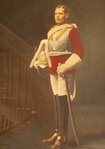
Trooper Victor Dey Smedmore

Trooper Victor Dey Smedmore
My uncle Victor