Showing posts with label levy family. Show all posts

Thursday, 31 May 2012

All the Sevens ... or Way Past My Shelf Date

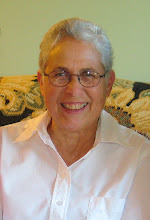
I’ve been feeling guilty as I haven’t updated my blog for about four months, and wondered what I should write about next. Well, today is my birthday and I’ve reached the august age of seventy-seven … so I thought perhaps it was time to blog about myself for a change. The first thing to think about was what should I call this post? The title “Way Past my Shelf Date” came to mind, based on that wonderful quote from Psalm 90, verse 10: “The days of our lives are threescore years and ten …” which would seem to suggest that to live beyond seventy is to do so on borrowed time … Which is why I prefer “All the Sevens”. In my teenage years and somewhat later I used to go to the Sergeants’ Mess at Up Park Camp with my pal, Sheila Bewley, whose older sister, Dawn, had married a Sergeant, Andy Taylor, who was stationed there. There we played Tombola, a type of British bingo, which, if I remember correctly went up to 99, and was not played under letters like B I N G O , but had its own language. So 77 was “all the sevens”, 99 was “all the nines”, but 66 was “clickety-click”. 21 was “key of the door” … any number ending in zero was “blind”, i.e. 50 was “blind 50”, yet 11 was “legs eleven”, and so on. Perhaps there are some of you out there who remember all this …


I was born on May 31st, 1935 at Nuttall Memorial Hospital, at Cross Roads, Jamaica

The hospital was founded in 1923 built on land purchased by the Diocese of Jamaica and commemorates the work of the Reverend Enos Nuttall, Bishop of Jamaica, after whom it is named.  My parents, Michael Levy and Maud Smedmore, already had one son, Mickey, born 2 April 1927. They were then living at 7 Anderson Road, Woodford Park. My father was a civil service clerk in the Government of Jamaica. There is a photo of my brother, Mickey, probably taken at Anderson Road

 I have no memory of this place to go on, only the photo.

 When I was six months old my parents bought the house at 5 Holborn Road. I found an advertisement in the Gleaner of 5 August 1935 advertising the house as follows:
 I guess they must have bought the house at that time. It’s the only home I remember. Here’s a photo of my parents with me as a baby in front of the house at 5 Holborn Road --

My earliest memory of my birthday is of my fourth … I vaguely remember having this huge tube, like a very large Christmas cracker, which when opened contained all sorts of goodies. I don’t remember the contents, but I do remember dragging the container around the yard of our home at 5 Holborn Road. Somehow this was much more fun for me than whatever had been inside it.

I remember my childhood as being a very happy one. In a way I was almost an only child, as my elder brother, Mickey, was eight years older than I was and would have nothing to do with me. I realize now that, as the only male child in the family he had been quite spoiled until I came along … My mother’s aunt, Aunt Tess, made much of me and poor Mickey’s nose was quite out of joint, as we used to say. This led, of course, to ill feelings on his part, which I now understand, but did not at the time.

Our family was not that large. There were, of course, the aunts and uncles, all Smedmores, and of whom I’ve written before in my blog. I knew nothing about my father’s family on his mother’s side, the Da Costas, something I have always regretted. On the Smedmore side I had two cousins … daughters of my Uncle Lucius who had married Carrie May Burke, aka Maisie. They were both older than me. There was my cousin, Marjorie

And my cousin, Gloria
Marjorie had been born in 1925, so was two years older than my brother, Mickey, thus ten years older than me, and Gloria was born in 1927,a few months after Mickey. Both of them would have considered me as a mere child, so I really had not much interaction with them. I had another first cousin, whom I never met.  This was my cousin, Walter Berner, the only child of my father’s sister, Essie, who had married Cort Berner, and who lived in the United States. He was known as “Bunky”. I never had the opportunity to meet him, but I have made contact since with his daughter, Cheryl..
In my next post I’ll reminisce some more about my childhood memories.


Sunday, 5 June 2011

Finding Leopold -- But Did I? A Cautionary Tale

It’s been several months since my last post, about my elusive grandfather, Leopold Levy. I apologize for the delay which in many ways mirrors the difficulty and frustration I have experienced in trying to discover more about him. At one point I thought I had indeed found out who he was and where he came from, and then other information surfaced and now I’m once again unsure … This is why I call this a cautionary tale because so often we think we’ve found the records we need to round out our genealogical research and then something else comes along which throws a spanner in the works.

In my previous post I said that I had found an item in the Gleaner which set me on the trail. This was his death notice in the Gleaner of March 5, 1917. Up to this point I didn’t even know when he had died. All I had been told was that he died in Havana, Cuba. Well, even this was incorrect!

Leopold had died in Cuba all right, but in Santiago-de-Cuba, on the south coast of the island, west of Guantanamo, and nowhere near Havana, which is on the north coast. Santiago-de-Cuba would have been much closer to Jamaica for purposes of travel. The notice, which I assume was placed by his widow, Alice, indicated that he had been born in Strasbourg, Alsace, and that he was 69 years old. Based on this information, then, my next task was to search for the birth of a Leopold Levy in the birth indexes for Strasbourg. These records, fortunately, had been microfilmed by the LDS.  I assumed a birth date for Leopold of approximately 1848 and that is where I began.

I was to discover later that the name Leopold Levy is fairly common, but my search in the microfilm turned up just one that seemed the most likely … even though the birth date given was 5 December 1846. This Leopold Levy was the son of one Benjamin Levy and his wife, Marie Anne Bloch.

The record, of course, was in French, as follows:

ACTE DE NAISSANCE

La six Décembre, mil huit cent quarante-six, a dix heures ........ faisant fonctions de l’Etat civil de la ville de Strasbourg .... département du Bas-Rhin, est comparu BENJAMIN LEVY, age de quarante six ans, et profession de Commissionaire domicilie a Strasbourg, ... nous a présenté un enfant du sexe masculin, ne a Strasbourg, ne le cinq Décembre mil huit cent quarante six a onze heures du soir a Grand ‘ rue, No. 115.... fils de lui déclarant et de MARIE ANNE BLOCH, son Epouse. ... et a donné le prénom de Léopold.

According to the above Leopold’s father was one Benjamin Levy, age 46, a commissionaire living in Strasbourg at no. 115 Grand’ rue. Witnesses to the birth registration were Jacques Maas, commissionaire, and Jacques Hoffmann, garcon brasseur, both of Strasbourg. [A commissionaire is an agent of some sort and a garcon brasseur would have worked in a brewery].

I then went looking for a marriage record for Benjamin Levy and Marie Anne Bloch. I was hoping that there might be a further clue in the names of their parents which might tie them to Alice’s and Leopold’s children. So far, I had found no such naming patterns. I did find a marriage record for them as follows:

ACTE DE MARIAGE

Le Onzième jour du mois d’Octobre de l’an 1842, à 10 heures du matin Acte de mariage de Benjamin LEVY, majeur d’ans, né en légitime mariage le 20 floréal an 8, à Strasbourg, domicilié à Strasbourg Profession commissionnaire, veuf de Barbe STÜFFEL, décédée en cette ville le 2 février 1840, Fils de feu Juda LEVY, colporteur, décédé en cette ville le 19 septembre 1826, et de feu Agathe MAYER, décédée en cette ville le 23 mai 1822, Et de Marie Anne BLOCH, majeure d’ans, née en légitime mariage, le 15 décembre 18 06, à Matzenheim (Bas-Rhin), domiciliée à Mülhausen (Haut-Rhin), fille de feu Simon BLOCH, chaudronnier, décédé à Matzenheim le 5 mars 1820, et de feue Rosine DREYFUSS, décédée à Matzenheim le 19 mai 1810.

One thing I’ll say for French records … they are indeed comprehensive! The above record told me that Benjamin Levy had been previously married to Barbe Stuffel, who had died 2 February 1840, that he was the son of Juda Levy, a peddler, who had died 19 September 1826, and his wife, Agathe Mayer, who had died 23 May 1822. Benjamin married Anne Marie Bloch 11 October 1842, and she was the legitimate child of Simon Bloch, a tinker, and his wife, Rosine Dreyfuss.

Assuming all this was indeed correct it really didn’t give me any clue as to how Leopold got to the Caribbean. His origins appeared to be humble, yet I had been told that my grandfather could speak about seven or eight languages.  He would have spoken French and probably German or Yiddish, and he obviously spoke English and must have been able to converse in Spanish as he spent time in Colon, Panama and Cuba. As I mentioned in my previous post, the family claimed he was an oculist, though I never found that term applied to him. He was, according to the records I found, a book-keeper, a merchant, a clerk … but still an educated man. This didn’t seem to fit with the humble background I had found. What I really needed, of course, was to see his marriage record, which hopefully would give his father’s name. As for how he got to the West Indies … again I was unable to find any record through Ancestry for a passport issued to him.  So, the question remained … did I have the right Leopold Levy? As I said at the beginning … this is a cautionary tale and in my next post you will see why.

Wednesday, 2 April 2008

Remembering My Brother, Micky

If he had lived, my brother Micky would have been eighty-one years old today. Sadly, he died far too young, at thirty-six, leaving a wife and three very young children. This post is dedicated to his memory.

My parents, Michael Leopold Levy and Maud Dey Smedmore, were married April 27, 1926. A year later, April 2, 1927, their eldest child, a son, was born and christened Michael Owen Dey Levy, but known by everyone as Micky. He was the first nephew and grandchild in the family. Although my mother was one of nine Smedmore children, and my father, Michael, was one of seven, their generation had not proved as fruitful. Only two of the Smedmores were married by 1927 -- my uncle Lucius, who had two daughters, and my mother. Two Smedmore men, Rodney and Julian would marry eventually but they had no children. Micky, therefore, occupied a unique place as the first boy in that generation. Here he is with his mother, probably at their first house on Anderson Road:

My mother kept his hair long till he was about two years old, a fact he hated to be reminded of. Here he is again, sitting on the steps of the house at Anderson Road.

My mother did not get pregnant again until Micky was about six, so he was the only child for quite a while and, according to my mother, quite spoilt by his aunts and uncles. My mother had a miscarriage, which was a great disappointment to her, and then shortly after became pregnant with me and I was born at the end of May in 1935, by which time Micky was eight years old. He had been the favourite of my great aunt, Tess, but when I came along Aunt Tess turned all her attention to the new baby and "Micky's nose was out of joint", as my mother put it. This was her explanation for why we were not close as brother and sister, but I think the difference in age had a lot to do with it.

Micky went to school at Jamaica College when Reginald Murray, known as "Reggie", was Headmaster.

I believe he sat the Senior Cambridge Exam but left school without going on to the Cambridge Higher Schools Examination. With the help of a family friend, Cyril Tame, Micky went to work at Barclays Bank in Kingston, where he worked for many years. Men who joined the Bank at that time could expect to be sent all over the island and even to other islands where the Bank had branches, so I did not see much of Micky in this time period. One of his postings was to Trinidad so he was away for some time and there was little chance for us to develop a relationship. In fact, I would have to say that our relationship consisted of a certain amount of hero worship on my part and bare tolerance on his. He was a dreadful tease and would make my life quite miserable at times, so we just weren't that close.

Micky was incredibly popular, however, with his friends both male and female. He was very involved in rifle and pistol shooting and competed in the sport and was also a motor car enthusiast and took part in motor rallies.

One of his favourite sports was hunting alligators,(actually crocodiles), which are now an endangered species in Jamaica, but were fair game back in the forties and fifties. He would tell the story of how, on one of his alligator hunting expeditions, his life was saved by the gristle in his mother's roast beef sandwich. Micky was squatting by the shore, eating his sandwich, and turned to spit out a piece of gristle. There, aproaching him, was an alligator with its jaws wide open. He just had time to grab his rifle and shoot it.

At a time when I was older and we could have developed a closer relationship we were once again separated by circumstances. Micky got married and emigrated to Canada where his eldest child was born. Here he is, with his son, Michael, reading one of his favourite magazines.

By the time he and his family returned to Jamaica it was I who was getting married and leaving the island. We would see each other whenever I returned home for a visit. In 1963, when he died of a cerebral haemorrhage, I was living in Winnipeg. We had never really gotten to know each other as adults, and that is what I regret most of all.

Friday, 7 March 2008

The Levy Family -- Coming to America

Of the four surviving children of Leopold and Alice Levy three went to the United States. My father, Michael, was the only one who remained in Jamaica, to take care of his mother who had been widowed in 1917. Michael joined the Civil Service in 1908 at the age of nineteen and remained there until his retirement at age sixty. Here is a view of the Governernment Buildings as they would have been in his time there.


Michael worked in the Administrator General's office, eventually becoming Trustee in Bankruptcy in 1948. This photo of him was taken inside the government offices.


After my father retired from the Civil Service he took another job, as his pension was not large enough to support the family, but that's another story ... For now I want to write about my aunt and uncles who did not remain in Jamaica but made a life for themselves in America.

The story of Jamaicans is one of movement away from Jamaica ... to other islands, to Central and South America, to the United States, to Britain and to Canada, always on the lookout for a better life, a better job, or perhaps just to get away. Just as Jamaica attracted all sorts of people from various parts of the world so too Jamaicans have left the island and settled elsewhere. In the 1900s they flocked to the United States, most of them to live in New York. On pages of the 1930 U.S. Federal Census one finds Jamaicans living together in groups in such boroughs as Manhattan.

The Ellis Island database is a wonderful source for this movement of people to the U.S. Another great source is the subscription website, Ancestry. I have used both to try to find information on my father's siblings. I have found his sister, Essie and his brother, Joseph, travelling to New York, but Leo, the other brother, continues to elude me. More of him later.

At this point I must explain that I did know Uncle Joe, who visited Jamaica in the 1950s and whom I visited with my family in 1960 when we left Jamaica to go to Canada. Unfortunately, at that time I wasn't particularly interested in family history research and didn't ask the questions I should have, so much of what I now know about my uncle Joe has been through research carried out some time after his death.

The same year that my grandfather Leopold died Joe left Jamaica to go to the U.S. The story I was told about why my father's siblings left Jamaica was this: my grandmother, Alice, was afraid that the younger boys would have to join up to fight in the first World War. (My father, apparently, was not eligible to join up because of some medical reason.) She wanted them to go the U.S. because America wasn't in the war. Joe arrived in New York in September 1917, but the U.S. had entered the war on April 6, 1917, so this story doesn't really make sense to me. At any rate, I found Joe in the Ellis Island database, travelling to New York on board the ss Catherine Cuneo, leaving Port Antonio on August 28th and arriving on September 5th. Here is what the first page of the ship's manifest looks like.


Under the column "Name and complete address of nearest relative of friend in country whence alien came" Joe gave his mother's name and this is how I knew that by 1917 she was living at 22 Beeston Street. On page two of the manifest, under the heading "Whether going to join a relative or frined...", Joe gave the name, "Mrs. Warner (friend), 346 Summer Avenue, Brooklyn, N.Y." I have no idea who this Mrs. Warner could be! So often the records we find produce more questions than answers.

In my next post I'll write about some of the other surprising things I learned about my uncle Joe.

Tuesday, 18 December 2007

Looking for Levys -- a moveable family

My first foray into genealogical research on my father's family was to find and confirm the births and deaths of all the children of Leopold Levy, the mystery man from Alsace, and his wife, my grandmother, Alice Rodrigues Da Costa. I had been given the names of some of the children. I knew that there had been a daughter, Daisy, who died in infancy and a son, Gustave, who also died young. I knew that my father was the eldest surviving and that he had a sister, Essie, and two brothers, Leo and Joe, and that all three were in the United States. We would hear occasionally from Joe, whereas nothing was ever heard from Leo. Essie did keep in touch with my mother, and I know that my Mom and Dad visited her and her husband, Erich, in Fort Worth where they lived. (They had also lived in Muskogee, Oklahoma). Later this correspondence would cease as a result of Essie's descent into dementia, though my mother did continue to keep in touch with the wife of their only son, Walter, my first cousin, also known as Bunky. I never met him nor did we ever correspond.

But to return to the Levy children. In my last post I mentioned that the eldest child, Daisy, was born a scant two months after the marriage of Leopold and Alice in Colon, Panama. Alice returned to Jamaica and Daisy was born 23 September 1886 at 106 King Street, and, as I mentioned, the informant on the birth register was a Mrs. Jacob Rodrigues Da Costa. The father's name on the record is Leopold Levy, occupation "merchant", abode "Colon", so Leopold was not present at his daughter's birth.

As I found the births of the other children, and the deaths of Daisy, Lucien and Gustave, I noticed two things: first, Leopold was the informant on only two of the ten events I found: the birth of Lucien, the second child, and the birth of Gustave, the fifth child. The second thing I noticed was that the addresses where these events took place kept changing. In a span of fourteen years the Levy family lived at seven different addresses in Kingston!

What was the significance of the fact that Leopold was the informant on only two events? Did it mean that he wasn't there? I've done a lot of research in Jamaica and looked at a great many birth records and generally speaking the father is usually the informant when the child's birth is registered. I'd be interested in hearing from other Jamaican researchers regarding this. Yet, with the Levy children the two people whose names show up on six of the ten events are those of Alice, their mother, and Selina Rodrigues Da Costa, Alice's mother. More about her in another post. Certainly on Essie's birth registration Leopold's address is given as Port-au-Prince, Haiti. On the other records it appears that Leopold is in Kingston, so why is he not the informant? In fact, the birth of the youngest, Joseph Dudley, was registered by a Cathy D'Costa who, I finally figured out, was most likely the wife of Eugene Da Costa, Alice's nephew, the son of her older brother, Joseph.

Then there's the moving around! Here is a list of events which shows the various addresses the family lived at:

-- Daisy is born in 1886 at 106 King Street
-- Lucien is born in November 1887 at 83 Church Street
-- Daisy dies in December 1887 at 83 Church Street
-- Michael is born in 1889 at 127 King Street
-- Lucien dies in 1890 at 125 Tower Street
-- Essie is born in 1891 at 125 Tower Street
-- Gustave is born in 1894 at 121 Orange Street
-- Leo is born in 1895 at 13 Rosemary Lane
-- Gustave dies in 1899 at 68 Duke Street
-- Joseph is born in 1900 at 68 Duke Street

Here is a section of Stark's 1897 map of Kingston showing the area where the family would have been.

Why did the family move around so much? Again, this is not usual. My research has found that families usually seemed to stay in one spot, so it was quite common to see children being born at the same address over the years. This would, of course,indicate that the family in question owned their home. I believe that the Levy family must have been renters and more than likely were not financially secure. Certainly if Leopold was away a great deal money may have been tight. Eventually my grandmother Alice would own a home, at 22 Beeston Street, but I do not know when this was purchased. When Joe emigrated to the United States in 1917 he gave his mother as next of kin and that was the address that was listed for her on the ship's manifest. I know that my father helped her to pay the mortgage on the house before he was married.


Sometimes finding vital records about the family one is researching can lead to more questions than answers. I'll continue with this in my next post.

Sunday, 18 November 2007

Looking for the Levy Family

Some time after I started researching my family I realized that I knew far more about my mother's family than I did about my father's. My Dad did not talk about his family very much. My mother told me what little she knew and my Uncle Rodney contributed information as well. As I've mentioned before, I did know my Grandmother Levy as a child. She lived across from my mother's family, the Smedmores, at 22 Beeston Street, on the south-west corner of Beeston Street and Love Lane.

I remember visiting her as a young child with my parents, but I don't think we went there very often. We seemed to spend more time with my mother's family. I don't know the reason for this, but I suspect my mother was somewhat resentful of her mother-in-law. The story I was told was that she and my father had been engaged for seven years before they could get married because my father had to support his mother and help pay the mortgage on her house. My grandmother was a widow. Her husband had died a long time ago and my father's three siblings had taken off for the United States so he was the only one left to take care of her. Another possible reason for this lack of closeness was that my grandmother was Catholic and my mother was a staunch Anglican, and though it seems strange in these days of ecumenicism, back then there was separation between denominations of the Christian religion. In fact, there were even differences of opinion between high-church and low-church Anglicans!
The stories I was told about my grandfather were that he was a Jew from Alsace, an oculist by trade, and that he travelled throughout the Caribbean and Central and South America. He is supposed to have brought back a gold nugget from Brazil which was made into two signet rings, one each for my brother and myself. This is a picture of my ring --

It is engraved with three of my four initials, D M L, intertwined. Did the gold nugget really come from Brazil? I have no evidence that he was ever in South America. The few records that I have for him show him in Port-au-Prince, Haiti; Colon, Panama; and Cuba, where he died. My grandfather was indeed a mystery.

Here's what I was told about him by my mother, who, by the way, never knew him as he had died some years before my parents married. His name was Leopold Levy and my father was given the name, Leopold, as a middle name. Leopold could speak seven languages ... again I wonder about this. Certainly he would have spoken French and most likely German, coming as he did from Alsace, a country which has bounced back and forth between France and Germany. He certainly would have spoken English and no doubt Spanish as he spent a great deal of his time in Spanish-speaking countries. I assume that as a Jew he may have spoken Yiddish ... that makes five languages and I've no idea what the other two would have been. I was told also that he was an oculist, and in fact that is stated in my father's entry in Who's Who Jamaica. Yet, in the few records I found that name Leopold his occupation is invariably given as "clerk", "bookkeeper", or "merchant".

How and where did he meet my grandmother? Well, that was another story, this time from my Uncle Rodney who told me that they had married in Haiti. What was my grandmother, Alice Rodrigues Da Costa, doing in Haiti? According once more to Rodney, she was operating a ferry service between Kingston and Haiti! I have not so far found any evidence of this. How many children did they have? Seven, I was told, but three had died young. And then there was this fanciful tale that Leopold had insisted the first child be brought up Jewish, but she died so he stated that the rest might as well be brought up Catholic! It sounded feasible, except that certain questions kept popping up in my mind. First of all, my grandmother was Catholic and Leopold was Jewish, so who would have married them? At that time I didn't think either the Jews or the Catholics would have done so. Secondly, if they were married in the Catholic Church then wouldn't Leopold have had to agree to bring up the children as Catholics? Finally, no child of this marriage would have been named in the synagogue as the mother was not Jewish. And the tale was pretty well disproved after I discovered a baptism, performed by Father William Spillman, S. J., in Holy Trinity Catholic Church in Kingston for the eldest child, Daisy Agatha.


So, here's what I knew so far. My grandfather, Leopold Levy, came from Alsace; met my grandmother in Haiti and married her; they had seven children and he died in Cuba. As for the children the names I had were Daisy, Lucien and Gustave, all of whom died in infancy, and the remaining four were my father, Michael, and his siblings, Essie, Leo and Joe, all three of whom moved to the United States. When I began researching the family I started with birth records for the children, all of whom were born in Kingston, between 1886 and 1900, and it was not difficult to find registrations of their births in the microfilm records of the Church of Jesus Christ of Latter-day Saints (LDS), aka Mormons. I have spent a great deal of time at an LDS Family History Centre and I am grateful to the Mormons for microfilming many Jamaican records, including Church of England parish records as well as the civil registration of births, marriages and deaths. I found birth records for all seven children and was therefore able to sort out their birth order: Daisy, born September 1886, died December 1887; Lucien, born November 1887, died April 1890, my father, Michael, born August 1889; Essie, born March 1891; Gustave, born May 1894, died December 1899; Leo, born July 1895; and Joe, born January 1900.

Whenver anyone asks me how to begin doing their family history I always repeat the well-known axiom: "Start with yourself and work back". Another one is: "Talk to your relatives and ask them questions." Good advice! I certainly did. But the next good piece of advice is: "Look for the records which should confirm that what you have been told is true". (I should make one thing clear ... I didn't really get started on the research until many years after I was told the "facts", so was unable to share the results of my research with my family as they were no longer alive.)

I was somewhat stumped by the fact that my grandparents had got married in Haiti. I had no idea where in Haiti they were married -- Port au Prince was a possibility, but how to get the record? I assumed that the marriage must have taken place around 1885 as Daisy was born in September 1886, but for the longest time I had no proof of this particular fact, and then I had an email from Madeleine Mitchell, an indefatigable Jamaican researcher who is also the co-ordinator for the Jamaican Genealogy page on Rootsweb. Madeleine had been going through microfilm of the Jamaica Gleaner and had come across something of interest to me in the paper for 1886. (I also for a while went through the early issues of the Gleaner on microfilm, which I got on interlibrary loan from the Library of Congress, but at the time that I heard from Madeleine I had not yet got to that year. Now that the Gleaner is digitized and on line it is less onerous to search.) Madeleine had found evidence of the marriage of my grandparents, and it wasn't what I was told! They had not married in Haiti; in fact, the marriage took place in Colon, Panama, and not in 1885, but in July 1886! Here is a copy of the notice as it appeared in the Gleaner of July 23, 1886:


So, there was one "fact" proved wrong. I now had what appeared to be something of a scandal in the family, in that my grandmother was some seven months pregnant when she got married! Which brings up another question, namely, when and where did Alice meet Leopold? Was he living in Jamaica and then took off for Colon, as a result of which Alice went after him? She did return to Jamaica as Daisy was born there at 106 King Street. A Mrs. Jacob Rodrigues Da Costa was the informant on the birth record and Leopold's occupation was given as "merchant of Colon".

So it turns out that finding that piece of information brought up more questions than I had previously, such as, who was Mrs. Jacob Rodrigues Da Costa? The answer to this would lead me to a whole new family that I knew nothing of previously, but before that I would investigate the Levy family more thoroughly.

Thursday, 16 August 2007

About My Uncles

In my last post I mentioned a picture which hung in the dining room of 5 Holborn Road, of the Princes in the Tower. Our picture was a black and white print, not colour like the one above, and below the picture were these lines from Richard III, as spoken by Queen Elizabeth:

"Pity, you ancient stones, those tender babes
Whom envy hath immured within your walls!"

'Envy', in this case, personifies Richard III, the quintessential wicked uncle, at least as Shakespeare portrayed him. Personally, I belong to the revisionist school of thought which believes that Richard received a bum rap. Read Josephine Tey's wonderful novel, The Daughter of Time, and check out the Richard III Society of Canada, who each year on August 22nd, place an In Memoriam notice for Richard in the Globe and Mail. In case you're wondering why I'm mentioning this, it's because my daughter asked when I was going to write about "the wicked uncles". Well, I had no wicked uncles. They were all regular uncles ... each with his own foibles and peculiarities, but nothing out of the ordinary, except, perhaps, that the eldest three never married.

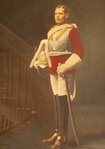
My very first post was about my Uncle Victor, the eldest of the Smedmore boys, who went to England in 1915 and joined the Life Guards of the Household Cavalry, was sent to France with the combined battalion of the Reds and the Blues which made up the Household Battalion of the British Expeditionary Force, and was killed in action in 1918. I never knew him of course, only what my mother would tell me about him, and what little information I found about him in the online Daily Gleaner, which reported on his joining up and on memorial services held after his death. The only picture I have of him is a large framed painting , which may have been a photograph which was colorized, showing him in his Lifeguard uniform.


I remember another picture of him, at 49 Beeston Street, one of a group of three soldiers in their khaki uniforms, but I have no idea where that picture ended up.
Victor was born in February 1886, and the next son, Norman, was born the end of November 1887. He is another uncle that I never knew, and in a way he's the real mystery man of the family. He doesn't seem to have been as popular with his sisters as was his older brother ... but then, getting killed in the war does give one a certain cachet. Norman, known by the family as Normy, also left Jamaica, but not to fight. Like many other Jamaicans he headed off to New York in June 1918, on board the ss Zacapa. On the ship's manifest he gave his next of kin as his mother at 49 Beeston Street, and stated he was going to stay in New York with a friend, Joseph Levy. Joseph Levy was the youngest brother of my father and had himself left Jamaica for New York in August 1917. Norman claimed on the manifest that he was going to the U.S. for six months but he certainly never returned to Jamaica. He lived there until his death in July 1953. I have no photographs of him and all I know of him is what I've been told by my mother, and what I've been able to find out through research. He settled first in Brooklyn where he worked as a traffic checker for the Public Service Railroad Company, and in September 1918 he filled out a registration card for the draft. After that he appears to have worked for the rest of his life in New York for Swift & Company, meat packers. Thanks to David Priever, a researcher in New York, I was able to get a copy of the administration of his estate from the Surrogate Court of New York ... like many of the Smedmores, he left no will ... and what ever else I know about him comes from this brief obituary in the Gleaner of August 8, 1953. That Norman was a Freemason doesn't surprise me as my grandfather and my Uncles Rodney and Owen also belonged to the Scottish Rite. I had not known that, like Victor, he attended Wolmer's Boy School, nor that he had worked for the lumber companies in question. I do know, from what my mother told me, that he would send money home for his mother and sisters, and I know, from a brief notice in The Gleaner that Elma went to New York on vacation in June 1951,so I imagine she must have visited Norman. One thing I do remember is how surprised the family was at how small his estate was -- according to the lawyer, Albert Stark, a mere $4,400. Considering that Norman never married, lived in lodgings and had worked steadily since arriving in New York, this small amount to be divided between his siblings, after all expenses had been paid, came as quite a shock.

I come now to the Smedmore uncles that I did know. The next one in the family was my Uncle Owen, born in November 1891 in Port Royal. To my mind he was the best looking one of the family and it always puzzled me that he never married.


I think one reason may have been that he had a speech impediment, a stammer, as did Rodney and Lucius, though I remember that Owen's seemed to be the worst of the bunch. There are probably all sorts of scientific reasons for speech impediments, but I feel pretty sure, from what my mother told me, that this was exacerbated by my grandfather's treatment of his sons. He had no patience when they stuttered and would tell them to speak up without stammering. I think Owen was probably shy. He worked all his life at D. Henderson and Company at the corner of King and Harbour Streets.

I remember him as gentle and generous. I could always touch him up for money at Christmas time when all the family gathered at 5 Holborn Road -- two shillings and sixpence or even five shillings, and then, of course, I would go to the other uncles and tell them how much I got from Owen, and they, not wanting to be outdone, would shell out as well.

I guess Owen felt he had an obligation to take care of his mother and sisters, once Victor had left for the war and Norman had emigrated to the States, consequently he lived at home with them, first at Beeston Street, and then later he moved with my aunts to 11 Dunrobin Avenue when the Beeston Street house was sold. I would say he had a very powerful sense of duty to his unmarried sisters and I know that he was a loving brother and brother-in-law. Sadly, he was on holiday when he died. The family had gone to White River for a vacation when Owen suffered a heart attack or a stroke while swimming.

In my next post I'll write about my other uncles, Rodney, Lucius and Julian. It may be a while as I'll be off line while on vacation for two weeks.

Saturday, 5 May 2007

The First Man in My Life ....

.... was my father, Michael Leopold Levy. (I've borrowed the heading for this post from Sandra Martin, whom I heard read from her new book, The First Man in My Life: daughters write about their fathers, published by Viking, 2007).

This is a picture of my parents and myself, at 5 Holborn Road, probably taken shortly after they had moved there. I remember as a child that my father would carry me around on his shoulders and sing to me in a high sweet tenor voice such oldies as "Silver Threads Among the Gold" or "I'll Take You Home Again, Kathleen". He would also sing opera arias ... this may be where I got my love of opera. I definitely remember him singing "M'appari" from the opera, Marta. And he would tell me stories ... he made up a whole series of tales about two little dogs, Blackie and Whitey, who just happened to exist on the label for Black & White Whiskey.My father was the breadwinner of the family .... my mother had worked as a teacher before she married but didn't work after marriage. As I mentioned in a previous post, they lived across the street from each other in Kingston. My father worked in the Jamaica Civil Service in the Administrator-General's Department which he joined in 1908, at the age of 19. He had attended St. George's College, on North Street in Kingston, a Catholic boy's high school, which had been founded by the Jesuits in 1850.


This photo of St. George's College is from the website of the St. George's College Old Boys Association, Ontario Chapter.

My father eventually rose to First Class Clerk and by 1948 was promoted to Trustee in Bankruptcy. I remember that as long as I knew him his hair was perfectly white. My mother said it had been like this from his youth, though it does not look quite like that in their wedding picture. This is a copy of the photograph which appeared in The Gleaner when they were married on April 27, 1926 at the Kingston Parish Church.


My Dad was the most easy-going guy I ever knew. Although he had been brought up Catholic and had gone to a Catholic school, he went along with my mother who was adamant about remaining Anglican (and high-church Anglican at that) and so they were married in the Kingston Parish Church, after being engaged for seven years, as my mother told me ... but that's another story.


Saturday, 28 April 2007

Visiting Kingston -- My Two Grannies

My four grandchildren are very lucky in that they have known all four of their grandparents. I was not so fortunate. Both my grandfathers had died before my parents were married; as for my grandmothers, well, I knew them for only a short time in my childhood. Both of them were born in 1861, and both died in 1943, at which time I was just eight years old. I do remember them, however. They lived across the street from each other: my Grandmother Smedmore lived at 49 Beeston Street and my Grandma Levy lived at 22 Beeston Street.

I have a better memory of my Grandmother Smedmore because I probably saw her more often. Sadly, I have no pictures of her or of my grandfather, William Dey Smedmore. I do have a photograph of my grandmother's youngest sister, Theresa Eugenie Brown, and I rather think there must have been a resemblance between them. This is my Aunt Tess.


Aunt Tess was the Postmistress for many years in Montego Bay, but that's another story.

I would go to Kingston with my parents to visit the grannies. This was always a treat for me, living as we did in the suburbs of St. Andrew. Kingston was different .... busy, lots of people on the streets, all sorts of stores, higglers and vendors selling things on the sidewalks, and we got to ride the tramcar!


I remember that I used to tell my Grandmother Smedmore Anancy stories, which she enjoyed very much. Anancy, or Anansi, is a figure of folklore, a spider, a trickster hero, based on folktales brought from West Africa. Another Jamaican blogger, Floyd Brooks, has posted an excellent article by Marcia Davidson on Anancy stories on his blog, Jamaica Land We Love.

We didn't visit my Grandma Levy as much. I have one memory of her ... the room she was in was quite dark, and I do not really remember much about the house. I remember she was dressed in white. The room was probably dark because Grandma Levy was blind. She had had cataract surgery, which in the 1930s and '40s was nothing like what we know today ... no lasers! Patients had to lie completely still on their backs, with the head placed between two sandbags to keep it perfectly still as any movement too early after the surgery could cause blindness. My Grandma Levy was subject to nightmares and apparently had one which caused her to start up suddenly, and as a result she lost her sight. I remember she talked about her late husband, Leopold, but I do not remember what she said and at that age I wasn't particularly interested. It would be a long time before my interest in family history would lead me to find out what I could about him and about my Grandma Levy's past.


Arras Memorial

Arras Memorial

Trooper Victor Dey Smedmore

Trooper Victor Dey Smedmore
My uncle Victor