Showing posts with label baylis family. Show all posts

Sunday, 10 February 2008

Falling Walls -- the 1907 Earthquake -- part 2

It is not known exactly how many people perished in the 1907 earthquake and subsequent fire that ravaged the city of Kingston on January 14th, 1907. Estimates range from 600 to 1000. Lists of the dead and injured can be found on line: on the Jamaican Family Search, as reported in the Gleaner of January 18, 1907 and a further list of victims in the paper of January 21, 1907. The Genealogy of Jamaica webpage also lists victims of the earthquake, extracted from the Gleaner of March 2, 1907. I have spent some time going through the death registrations for 1907 for Kingston. There are names that appear on the death lists for whom there is no registration, and conversely, death registrations for some whose names are not on the lists. For the majority of those killed on January 14th the cause of death given is "Killed by falling walls". Not everyone died instantly; many died later in hospitals as a result of their injuries or of tetanus from amputation of a limb or limbs. The Mayor of Kingston, Charles Walter Tait, was one who died later -- on 10 February 1907, of "concussion of the spine".


The downtown business area of Kingston was most affected by the quake. Some places of business lost a number of workers. Nine staff members at the Myrtle Bank Hotel were killed. Here are two postcards of the Myrtle Bank Hotel, before and after the earthquake:


I found death registrations for six members of the staff of Emanuel Lyons and Sons Ltd. at the corner of King and Harbour Streets. This postcard of what was left of the building shows how devastating the damage must have been.


As I read through the records I found a variety of comments under cause of death. One woman, Lucinda Allen of 4 James Steet, married, age 40, died "apparently from fright -- no injury". Thomas Bernard Philpotts, cigar maker, age 57, died of "heart disease and fright due to the earthquake". Another woman, Henrietta Pinnock, "died after premature delivery brought on by shock received from the earthquake". One of the saddest I found was the record for a little girl, Emily Letitia Jopp, age 6. On her record this note was added: "This little girl was found dead with a slate beside her on which she had just written 'God is Love'".

It would be too easy to say that people died because they were in the wrong place at the wrong time -- that sentiment could refer to all those who lost their lives, but some deaths stand out, such as that of Marcus Moses Delgado. Thanks to Stephen Delgado Porter I know something of Marcus' history. He was the son of Edwin Delgado and had married Miriam Brandon, daugher of Nathaniel Brandon. They had six children. In December 1904 Marcus emigrated to Cartagena, Colombia, to improve his fortune, leaving his wife and children in Kingston. He returned to his family at Christmas 1906 and on January 14th, 1907, went downtown to buy his daughter, Sybil, a birthday present -- that day was her eleventh birthday. Marcus was killed by falling walls, at the corner of Harbour and Duke Streets. He was 48 years old.


Another casualty,somewhat closer to me. was that of Bertie Bold Vendryes, the wife of Philip Camille Vendryes. Bertie was the daughter of George Christopher Baylis and his wife, Elizabeth McDonald. Elizabeth was the step-daughter of my great grandfather, Daniel Elias Brown who had married her mother, the widow of Donald McDonald. Not only were the Brown and the Baylis families close but George Baylis worked at the Dock Yard in Port Royal along with my grandfather, William Dey Smedmore. Bertie, who was pregnant at the time, died on January 23rd at Winchester Hospital,as a result of premature delivery brought on by the earthquake,as well as puerperal fever and heart failure. The child, a boy, Joseph, did not survive. Also killed on January 14th was Bertie's and Philip's daughter, Vida, who was nine years old. So Philip lost his wife, his daughter and his newly born son.

Many well-known buildings in Kingston and elsewhere in the island were damaged or totally destroyed. The Kingston Parish Church lost its steeple and its clock.


The tower and clock were restored but without the steeple.
Some odd things happened as a result of the earthquake; for example, the statue of Queen Victoria at the Parade was turned completely around,


and the statue of Father Joseph Dupont, one of the longest-serving Jesuit priests in Jamaica, was knocked completely off its pedestal.

It is no wonder that there are so many postcards of the damage wrought by this earthquake, the worst that Jamaica had experienced since the 1692 quake which destroyed the town of Port Royal. In a matter of a minute or two so many buildings in the city were reduced to rubble and so many people died. Yet the people of Kingston would come back from this devastation. As the Gleaner of January 18, 1907, put it:

"Just when we were talking of returning prosperity the hand of adversity has again touched us, and once more we are called upon to fight our way forward. We will do so. We will not allow ourselves to be terrified. We will build Kingston again and, with God's help, will build it better."

Saturday, 7 April 2007

Leaving Port Royal

In the September 19, 1873 issue of the Daily Gleaner and DeCordova's Advertising Sheet there appeared an unsigned article headed "Port Royal". The author reported on his recent visit to Port Royal and while he commented favourably on its healthy atmosphere, thanks to the constant sea breezes, he could not help asking:
... "how do the people live? — When ships are in all is astir and a livelihood easily gained. Beyond the permanent residents, such as the naval and military authorities, the townspeople, but with few exceptions, are composed of the lower order. It is known that there is scarcely any employment beyond that given at the Dockyard, and then nearly all the seamen on board the guard-ship, the Aboukir, do duty in the Yard, so that the people have few opportunities of gaining a decent livelihood — thus they are poor, ill-fed and badly clothed. The town, therefore, with such a community represents a miserable appearance. The houses are not only shabby, but in wretched order, made more for sunny days than rainy ones."

It is no wonder, then, that families such as the Smedmores and the Browns would leave Port Royal for residence in Kingston. William Smedmore would have been ready to retire. He was not a well man, being subject to crippling headaches and most likely suffered from high blood pressure. (He died in 1914 at the age of 77 from a cerebral haemorrhage.) The Dock Yard was winding down and would close completely in 1905. Another family connection, George Christopher Baylis, who also worked at the Dock Yard as a writer, in the Victualling Department, had left Port Royal with his family about 1887 and settled in Kingston, though he continued to work at the Dock Yard as a clerk. George Baylis had married Elizabeth McDonald, the elder daughter of Sarah Letitia Brown by her first husband, so the Browns and Baylis were close. The Baylis family was fortunate in that John William Jones who married his grandmother, had left his house in Kingston at 119 Upper King Street to George and his family.


A View of Upper King Street, Kingston


I am not sure when the Browns left Port Royal. All Daniel's children were born there and baptized in the Methodist Church. They must have left some time after the birth of the youngest child, Theresa, in 1874. Daniel died in 1891 at 115 East Street, Kingston, and his death was registered by Sarah, his third daughter, who gave her address as 49 Rose Lane, Kingston. Daniel's widow, Sarah Letitia, died at 49 Rose Lane in 1898 and Bertha, the fourth daughter, was living there in 1901 when she gave birth to an illegitimate child. (She married the father, Percy Esterine, in 1904 from the same residence.)


William Smedmore and his family left Port Royal some time after 1896 when Rodney was born. I rather think that William must have left his employment at the Dock Yard at that time. The family settled at 49 Beeston Street which remained the family home well into the 1950s, long after most middle class families had fled Kingston for the suburbs of St. Andrew. Since William had retired the older boys, Victor, Owen and Norman, had to go out to work to help support the family. Apparently they worked as clerks at D. Henderson & Co. at the corner of King and Harbour Street.

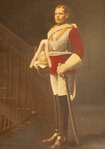
D. Henderson & Co., was a firm of hardware and lumber merchants, founded by David Henderson, a native of Scotland, whose sons, James and Alexander, carried on the business until it was bought out by a group of British capitalists who kept the name. Victor would have worked there until 1915 when he left for England to enlist in the Lifeguards. Norman left Jamaica in 1918 for New York City where he lived until his death in 1953. Owen worked at Henderson & Co. until he retired.

Looking back, it seems to me that there would have been all sorts of considerations for the move from Port Royal besides the matter of employment. There was the matter of schooling for the children, and Kingston would have offered more opportunities for that.

My mother would have been very young when she left Port Royal so her memories of it are cloudy. Apart from mentioning that she had been born there she had very little to say about it. Port Royal settled into a quiet little fishing village with a historical past which is today a tourist attraction for those who would venture out to see it.It rates a couple of pages in the Rough Guide to Jamaica. If you would like to know more about its history then take a look at the excellent article written by Dr. Rebecca Tortello in the Gleaner series "Pieces of the Past"


Arras Memorial

Arras Memorial

Trooper Victor Dey Smedmore

Trooper Victor Dey Smedmore
My uncle Victor