Saturday, 8 November 2008

Lest We Forget -- A Tribute to Those Who Served in the Great War

"They shall grow not old, as we that are left grow old;
Age shall not weary them, nor the years contemn;
At the going down of the sun and in the morning
We shall remember them. " -- Lawrence Binyon

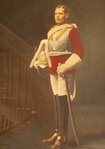
The last item in Sarah Letitia Brown's Commonplace Book is a poem of three stanzas, written in my mother's handwriting, and headed "A Tribute to the memory of Victor Dey Smedmore, 1st Life Guards. Killed in action, Jan 29th 1918". At the top of the page she wrote "copy", so I do not believe she is the author of the poem, and I have no idea who that might have been.


The poem begins:

"We lift the voice lamenting from afar, while memory backward wends through buried years ..."

In my last post I had mentioned that I would comment on the contributions made by my grandfather to the commonplace book, but as November 11th comes closer I felt it was more appropriate to write about my uncle Victor and his sacrifice in the First World War, as well as the sacrifices of other Jamaican men who served in that conflict.

The very first post I did for this blog was about Victor. He was the eldest son of William Dey Smedmore and his wife, Amanda. He was born in 1886 in Port Royal, moved with the family to Kingston, and worked at D. Henderson and Company. He went to England in 1915, joined the First Life Guards, went overseas to France where he was wounded twice, and was killed in action January 1918. I often wondered why he decided to go to England to enlist when he could have enlisted in the West India Regiment but apparently there was a contingent of Jamaican men who did go to England for this purpose. The Gleaner reported on some of them on June 7, 1915:The men listed in the above Roll of Honour were members of the Kingston Parish Church, but there were apparently many more who went to England to join up. My curiosity was aroused as to when Victor sailed for England and thanks to new data on the subscription genealogy database, Ancestry, I found his name on a ship's manifest, that of the ss Coronado, sailing from Kingston to Bristol, arriving at that port on August 15th, 1915.

The names are a bit small to read so here they are:

-- Lester Cecil Jacobs; Karl Everard Laidman; L. Cochrane Shackleton; Huntley Hearne; Maurice Hearne; Victor Dey Smedmore; Alfred George Ayers.

Now, these names mean nothing to me, except for Victor's. It was apparent that they had all seven travelled together on the same ship with the same intent in mind. My question was, had they all enlisted when they got to England? I therefore began a search for the other six. The first source I checked was the Commonwealth War Graves Commission, in the assumption that some of them might, like Victor, have been killed in the War.

The first one I searched for and found there was Karl Everard Laidman, the son of Herbert Edmund and Mary Jane Armstrong Laidman of 65 Norman Road, Kingston, Jamaica. Karl was a private in the Royal Fusilliers, aged 19, and he was killed on March 31st, 1916, a bare eight months after he arrived in England to enlist. He is buried in Lapugnoy Military Cemetery, Bethune, France.

Karl was not the only casualty of that group besides Victor. I also found an A. G. Ayers on the Commonwealth War Graves Commission website, a trooper in the 2nd Life Guards, who died 26 February 1917 and is buried in St. Sever Cemetery Extension, Rouen, France. What then of the other four?

I then searched the online edition of the Jamaica Gleaner to see if I could find any trace of them and I managed to find two more -- Lester Jacobs and Huntley Hearne. Both items were obituaries. Lester Jacobs died March 25th, 1971, at age 83, so I assume he was the Lester Cecil Jacobs listed on the ship's passenger list, though his war record was not mentioned. The obituary, which is brief, mentioned that he was the retired manager of Jamaica Retreading Company and that he was survived by a brother, Caryl, of Miami, Florida and other relatives. Huntley Hearne died April 13, 1964 and his obituary states that he was a "70-year old hero of the 1914 war and an acknowledged artist in the American advertising field". Huntley Hearne had been attached to the Royal Fusilliers and had been awarded the Military Medal for destroying a German pillbox.

I found a few references to Maurice Hearne, who I assume was Huntley's brother, mainly to do with his career as a cricketer. It would seem, then, that he also returned safely from the war. The only one that I could find nothing definitive about was L... Cochrane Shackleton. My searches in the Gleaner brought up articles on a Dr. T. F. Shackleton but this didn't seem to match the Shackleton on the passenger list ... then I noticed that his age was given as 42, whereas the other six men were all younger, between 18 and 29. Was this the doctor? It doesn't explain the differences in first names yet the Gleaner of September 25th 1916 noted that Dr. T. F. Shackleton had been posted to England to the Royal Army Medical Corps. I'm afraid this will remain a mystery!


"But where our desires are and our hopes profound,
Felt as a well-spring that is hidden from sight,
To the innermost heart of their own land they are known,
As the stars are known to the Night;
As the stars that shall be bright when we are dust,
Moving in marches upon the heavenly plain;
As the stars that are starry in the time of our darkness,
To the end, to the end, they remain." -- Lawrence Binyon

Sunday, 19 October 2008

The Commonplace Book -- the Contributors

It's been some time since my last post and I still want to continue with the story of my great-grandmother's commonplace book. However, first of all I want to mention a rather unpleasant comment I received on one of my earlier posts, in which I described going back to 5 Holborn Road in Jamaica. The person who left the comment did not identify themselves. Here it is:

"Where are all the black people?! Are you too good for them huh woman!! your despicable you old saggy lady!! "

Apart from the offensive nature of the comment I'm particularly incensed by the suggestion that I'm a racist. What Anonymous doesn't want to admit is that we Jamaicans are a mixture of all races and colours. Surely this is what the Jamaican coat of arms represents!
Out of many, one people ... I myself am a mixture ... Take my father's family for example! His father was a French Jew from Bas-Rhin, Alsace; his mother, though Catholic, was the daughter of a Sephardic Jew whose family, the Rodrigues Da Costas, I have managed to trace back to 1740. On my mother's side I am the product, I am sure, of both slaves and slave-owners, though it has been difficult for me to go back far enough to find the records that document this. Jamaica is home to people from all over the world and of all shades. Those of us whose families have lived there for a long while are the products of slavery, whether we wish to admit it or not. Thus I take exception to the above comment. I write about my family as I know it, based on my research.


Now, back to Sarah Letitia Brown's commonplace book. My great aunt, Susan Saunders Brown, the eldest of Sarah Letitia Brown's children, wrote four love poems in her mother's book. I have not been able to find their derivation, so for all I know they may be original. Here is one, titled " Love and Physic", and in brackets, "Leep[sic] Year", signed SSB, and dated 1.11.80.


Susan married a widower, John Cassis, on October 17th, 1883. John's first wife, Christiana Augusta Breckenridge, had died of cancer in 1880. Another of Susan's poems, also dated 1.11.80, is titled "Sympathy" and I wonder if it was directed to John. Did her commiseration for his loss eventually lead to love and then marriage? He was much older than her, aged 44 at their marriage while she was only 23. John already had a family of five children by his first wife. The eldest, Catherine, was a year older than Susan. Susan and John between them had four children, two of whom died young, and it seems that Susan did not get over the loss of her youngest, Laura, who died at five weeks, in 1891. Susan died in the Lunatic Asylum, now known as Bellevue Hospital, in November 1899. She may well have been suffering from depression as a result of the loss of her youngest child.

Susan and John's second son, John Madison Cassis, emigrated to Toronto, Canada where he married Fanny Stevens, of Todmorden, Ontario. They had seven children. Here is a picture of John in his garden in Toronto, with his next-door neighbour. John is on the left.

In my next post I'll mention a few other contributors to the commonplace book, one of them my grandfather, William Dey Smedmore.

Saturday, 13 September 2008

The Commonplace Book -- a Forensic Analysis

I've spent the past few weeks examining Sarah Letitia Brown's Commonplace Book. It's very fragile and I'm wondering how best to preserve it. As I wrote in my last post, the covers are gone, the stitching is coming loose as are several of the pages, and the pages themselves are very fragile and show signs of acidification. I'm thinking of taking it to a conservator in the hope that it can be preserved. My first choice would be Felton Bookbinding in Georgetown. Keith Felton has done excellent work with books from the Canadiana Collection at the Mississauga Library System.

In the mean time I'm considering both scanning and transcribing the pages which will be an awesome task! But first, let me describe the book and its contents. The pages are numbered and I wonder if the entries are in chronological order. If so, the first page with an actual date is page 13, a poem titled "Future -- in Darkness", of four verses, each four lines, dated 9th Sept. 1867 and signed "Robt. Raw, Port Royal." This, as I mentioned previously, was the Reverend Robert Raw, a Methodist minister who was known to be stationed in Port Royal between 1863 and 1868, and who had baptized some of the Brown children. The question I ask myself, then, is this: are pages 1 to 12 written prior to 1867? Unfortunately, they are not signed and I have been able to identify only two of the poems in this section, thanks to Google! One on page 10 is titled "Love" and begins:

"Why should I blush to own I love
'Tis love that rules the realms above;
Why should I blush to own to all
That virtue holds my heart in thrall?"

This poem, "To Love", I discovered is by Henry Kirke White,a Nottingham poet born in 1785 who died in 1806. Here is his portrait.
The other poem I was able to identify is titled "Italian Song", and is five stanzas of ten lines each. It comes from a book by William Henry Giles Kingston,(1814-1880) titled The Pirate of the Mediterranean, and is actually headed "Nina's Song". Kingston was born in London and wrote tales for boys, and spent most of his youth in Oporto, Portugal. To be honest, I never heard of either of these writers and one would have to guess that their fame has long since died out, but they must have been still popular when these poems were written in the commonplace book.

The next poem that I identified was actually written by an author whose name I recognized, Felicia Hemans, and was so indicated in the book. It was "The Bride's Lament" and is actually titled "The Bride of the Greek Isles", originally published in 1825 in New Monthly Magazine.

Felicia Hemans (1793-1835), born Felicia Dorothea Brown, was an English poet no longer in vogue. Her one famous poem which many may remember is "Casabianca", the first line of which is:

"The boy stood on the burning deck"

This entry is actually signed, but here again is a mystery. At the bottom of the poem is "Julia, Kingston". Who was Julia? I wish I knew! I'm intrigued by the fact that she clearly indicates she wasn't from Port Royal. Perhaps she was visiting the Brown family.

The entries in the commonplace book are representative of people who knew, understood and loved the literature of their period, some of it well known today, the rest not so much. On page 16 is an excerpt from "The Excursion" by William Wordsworth, followed by four lines of a poem from Drifted Snow Flakes, or Poetical Gatherings from Many Authors by Jane Hamilton Thomas on whom I can find nothing! This short excerpt is signed "Anna". Again, who is Anna? She indicated that the poem was by that prolific author, Anonymous.

Further on I found two verses from "The Corsair" by Byron, then on page 22 a poem in three stanzas, titled "Flora's Feast", which comes from Reunido, and Fugitive Pieces, 1864, by Anna Telluz. I can find nothing on line about Anna Telluz. I wonder if Anne Michaels got the idea for the title of her 1996 novel from the subtitle of this book?

This entry is initialled HDCM, and dated 22/2/71, February 22nd, 1871. On the preceding page is a beautiful illustration by the said HDCM.

I was able to find out something about this contributor. He was Henry DeClondesley Mitchell, and in the 1878 Kingston Directory he is listed as cashier at the Island Treasury. He was married to Susan Madeline Gully and in 1871 was living at 3 East Street.

I was surprised to find on page 30 an excerpt "from the Russian of Dershavin, translated by Dr. Bowring". From my research I discovered that it was written by Gavrila Romanovich Derzhavin, 1743-1816,
considered the greatest Russian poet before Pushkin. His works were translated by Sir John Bowring, 1792-1872, the fourth Governor of Hong Kong.
All in all, this commonplace book is an eclectic mix of poetry and prose which will keep me occupied for a good long time. In my next post I'll write about some of the people who contributed to the book and whom I've been able to identify.

Tuesday, 19 August 2008

Sarah Letitia Brown's Commonplace Book

The last time I saw my mother was in April 1976 when we all went to Jamaica to help celebrate my parents' 50th wedding anniversary. They were married April 27, 1926 at the Kingston Parish Church and had wedding pictures taken at my mother's home at 49 Beeston Street. Here is a picture of their wedding party:

My mother is seated in front, with my father at her right. Benind her is her bridesmaid, Vera Cox (who married Errol Henriques), and beside Vera is the best man, Julian Smedmore, my mother's youngest brother. The little boy at the left of the picture is Jack Duffus, who was the ring bearer.

All the parties who took part in my parents' wedding were at the fiftieth anniversary and posed for this photo:

From the left they are Vera Henriques, my mother, my father, Julian Smedmore and Jack Duffus. Sadly they are now all gone. My mother has planned to visit us in Ontario in early 1978 but died suddenly in her sleep on December 14, 1977. I made the trip down to Jamaica for her funeral and brought back with me various of her belongings such as photographs, jewellry, some letters, and a rather battered looking book, with no cover. The book meant nothing to me at the time ... it appeared to be full of handwritten verse and some prose, with the occasional illustration of a flower. There were different coloured pages, though rather acidified and the spine, such as it was, was falling apart. One could see that it had been sewn and that there had been a cover at one point.


It was some time before I really began to look carefully at this book. I discovered that some of the entries had initials beside them and with some effort I have been able to identify most of the people who wrote these entries. Only two entries have actual names beside them: one is "Julia", the other "Anna". (I think I know who Anna was.) A few have dates, and these are quite old. The earliest is 1867, and appears on page 13 ... the pages are numbered ... so for all we know the entries on the pages before this may be even earlier. Since the book was in my mother's possession ... though I never saw it in her lifetime ... it must have come down to her from one of her parents. I have no solid evidence to prove this but I believe the book may have belonged to my mother's grandmother, Sarah Letitia Brown. I shall try to explain why I believe this.

My mother never spoke of her grandparents, probably because she didn't know them. Her grandfather, Daniel Elias Brown, died before she was born and she would have been only four years old when her grandmother, Sarah, died. What little I know about Sarah comes only from the research I have done. When I first began the research I questioned my uncle, Rodney Smedmore, about the family. He knew that his grandfather was Daniel Elias Brown but he thought that his grandmother had been a Miss Williamson who had married a McDonald, and then married Daniel on the death of her husband. He knew this because his family knew Daniel's step-daughter, Elizabeth McDonald who married George Christopher Baylis, who like my grandfather, William Dey Smedmdore, was employed at the Port Royal Dockyard. So I searched for the record of Sarah's first marriage and found that her maiden name was Huggins, not Williamson. (I have no idea where Rodney got that name ... A cautionary warning to anyone doing research: check the family stories carefully. Quite often there are mistakes in people's memory!)

I found Sarah's baptism in the Port Royal Copy Register. It's difficult to reproduce the image here. According to the record she was born in Port Royal on August 21, 1832 and baptized by the Rev. T. Alves on October 28th. Her parents were James and Mary Huggins of Port Royal and she is described as being "of colour". She married Donald McDonald, a shoemaker of Port Royal and they had two daughters, Elizabeth and Mary. Donald apparently died shortly after the birth of the second child and Sarah remarried to my grandfather, Daniel Elias Brown. They had seven children, all born in Port Royal. Sarah died in 1898 in Kingston. Daniel had died seven years earlier.

Not much to go on, so why do I think that the book I found was hers? Well, based on one entry, by Robert Raw, dated 9th September 1867, I think it has to belong to her. Robert Raw was the Methodist minister in Port Royal between 1863 and 1868. He baptized three of Sarah's children: Sarah Letitia Webster in 1863, Richard Elias in 1866, and Bertha Rose (who was actually baptized Bertha Raw but seems to have changed her middle name) in 1868. At the time that Robert Raw wrote his verse in the book Sarah Letitia Brown was then pregnant with Bertha.

Why do I call it a commonplace book? Wikipedia defines "commonplace book" as "a way to compile knowledge, usually by writing information into books... Each commonplace book was unique in its creator's particular interests". In a way this little book reminds me of the autograph books I grew up with, where one would invite one's friends to write little verses or comments. The contents of this book reflect the literary interests of the Brown family and their friends and is a window into their lives.

In my next post I will go into more detail about the commonplace book and the people who wrote in it.

Monday, 11 August 2008

My Maternal Family -- Browns, Huggins, Vashons

I've been remiss in updating my blog for the past month. I've been spending time working on a presentation for a recent conference, African Roots in Canada, organized by the Toronto Branch of the Ontario Genealogical Society in cooperation with the Ontario Black History Society and the Toronto Public Library. The conference took place last Saturday, August 9th, 2008, at the North York Central Library, and was well attended with about 75 people registered. My part in this first-time conference was a presentation on Researching Your Jamaican Ancestry from Canada. At the end of my presentation I showed slides of a few records from my Brown ancestry. It occurs to me that I wrote one post, back on April 1st, 2008, about the Browns, but never followed up on them even though I indicated I would. So I thought I might expand on the Brown family to the best of my ability, showing some of the records I've come across in my research.


As I wrote in the earlier post, the Brown family came from Port Royal. I do not know for sure exactly where they lived there, but it could have been on a street similar to this one.


As I have already written, my great-grandfather, Daniel Elias Brown, was a shipwright, employed at the Port Royal Dockyard. I have not, so far, been able to find out much about his parents. He was born in Kingston 25 February 1827, on King Street, the son of Edward and Sarah Brown, and baptized on 3 May 1827. I have no further information on his parents, except that they had three other children, that I've found -- a daughter, Sarah Saunders Brown, born 24 December 1828 in Pink Lane, Kingston,and baptized in April 1828; another daughter, Eliza, born 9 May 1832 in Princes Street, Kingston, and a son, Jonas, born 25 August 1834, also in Princes Street. Both Eliza and Jonas were baptized 8 January 1837.

So, as I've indicated in my title, this is not just the story of the Brown family. Unable to find out more about Daniel's parents' origins, I moved to his wife's family. Daniel married a widow, Sarah Letitia McDonald. Sarah had married one Donald McDonald, a shoemaker in Port Royal, in 1851 in Port Royal. They were married in the Wesleyan Methodist Church by the Rev. William Tyson. This marriage record, part of the Dissenter Marriage Registers microfilmed by the Mormons, does not give the ages or names of parents of the parties, though it does indicate that permission was given for the bride to be married by her mother, "Mary Smith, surviving parent", whereas the groom was listed as being of "full age". By that we can deduce that Donald was over 21 and Sarah was not. Sarah's full name was given as Sarah Letitia Huggins, and I discovered in my research that her parents were James Vashon Huggins and Mary Goldson, both of Port Royal. By this time James Huggins was dead and Mary Huggins had remarried in 1845 to George Pitblade Smith.

Donald and Sarah had two daughters, Elizabeth Huggins McDonald, born 1852, and Mary Noel, born 1854. I have so far been unable to find a burial record in Port Royal for Donald McDonald, who must have died prior to 1858 when Sarah married Daniel Elias Brown. Here is the record of their marriage, from the Dissenter Marriage Registers for Port Royal:

This marriage also took place in the Wesleyan Methodist denomination; the officiating minister was the Rev. James Cox, another person who fits into my family research, though again, I have been unable to find out much about him except for a small entry in Philip Wright's Monumental Inscriptions of Jamaica, published by the Society of Genealogists in 1966. According to a mural tablet in the Wesley Church, Tower Street, "the Rev. James Cox died at Morant Bay, 30 May 1859, aged 55", apparently not too long after he married Daniel and Sarah. In corresponding with another Cox researcher I have learned that James Cox may have been born in Bermuda. He settled in Jamaica, married and fathered two sons that I know of: Theophilus Pugh Cox, born about 1844, who became the Headmaster of the Government Training College, Spanish Town, and Henry Martyn Hill Cox, born about 1845, who also became a Methodist minister. These brothers married two sisters, Mary Ann Barned and Lucinda Baker Barned, respectively.

Daniel, in marrying Sarah, took on her two daughters who would have been six and four years old, and not long after began a family of his own, seven children in all, six daughters and a son. All were born in Port Royal and baptized there in the Wesleyan Methodist church. I have written about some of them in previous posts -- Susan Saunders Brown who married John Cassis; my grandmother, Amanda, who married William Dey Smedmore; Bertha Rose who married Charles Percival Esterine and emigrated to New York; and Theresa Eugenie, who never married. It appears that, like the Smedmore family, the Brown family also left Port Royal at some point to settle in Kingston, since Daniel Elias Brown died there 7 April 1891, at 115 East Street. His death was registered by his daughter, Sarah Letitia Webster Brown, whose address was given as 49 Rose Lane, and that is where Sarah, Daniel's widow, died 25 July 1898. Perhaps Daniel and Sarah had lived at 115 East Street and after he died she went to live with her unmarried daughter, Sarah, who had been named after her.

In my next post I will pursue the story of Sarah Letitia Brown, my great-grandmother and her family history.

Arras Memorial

Arras Memorial

Trooper Victor Dey Smedmore

Trooper Victor Dey Smedmore
My uncle Victor